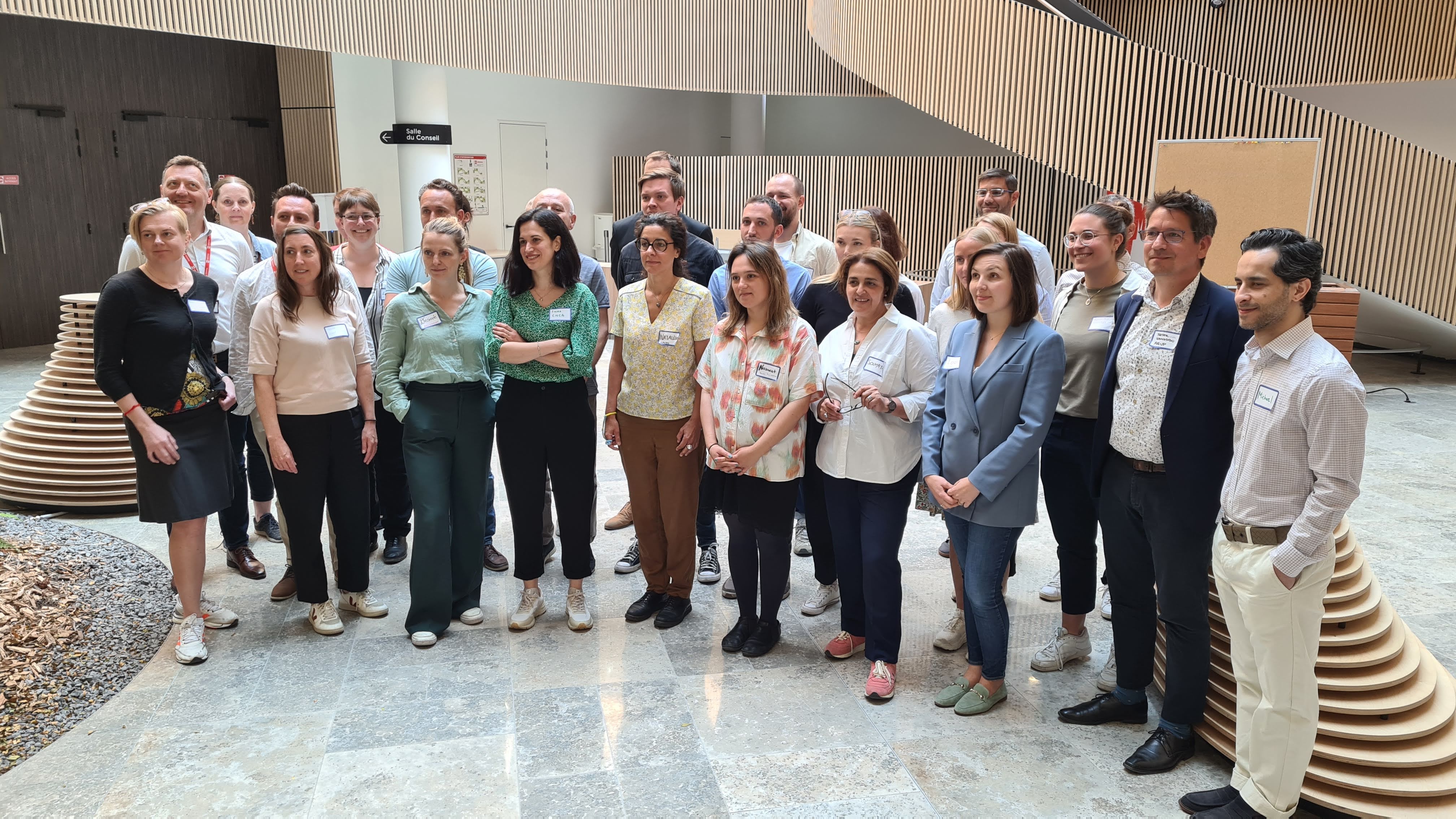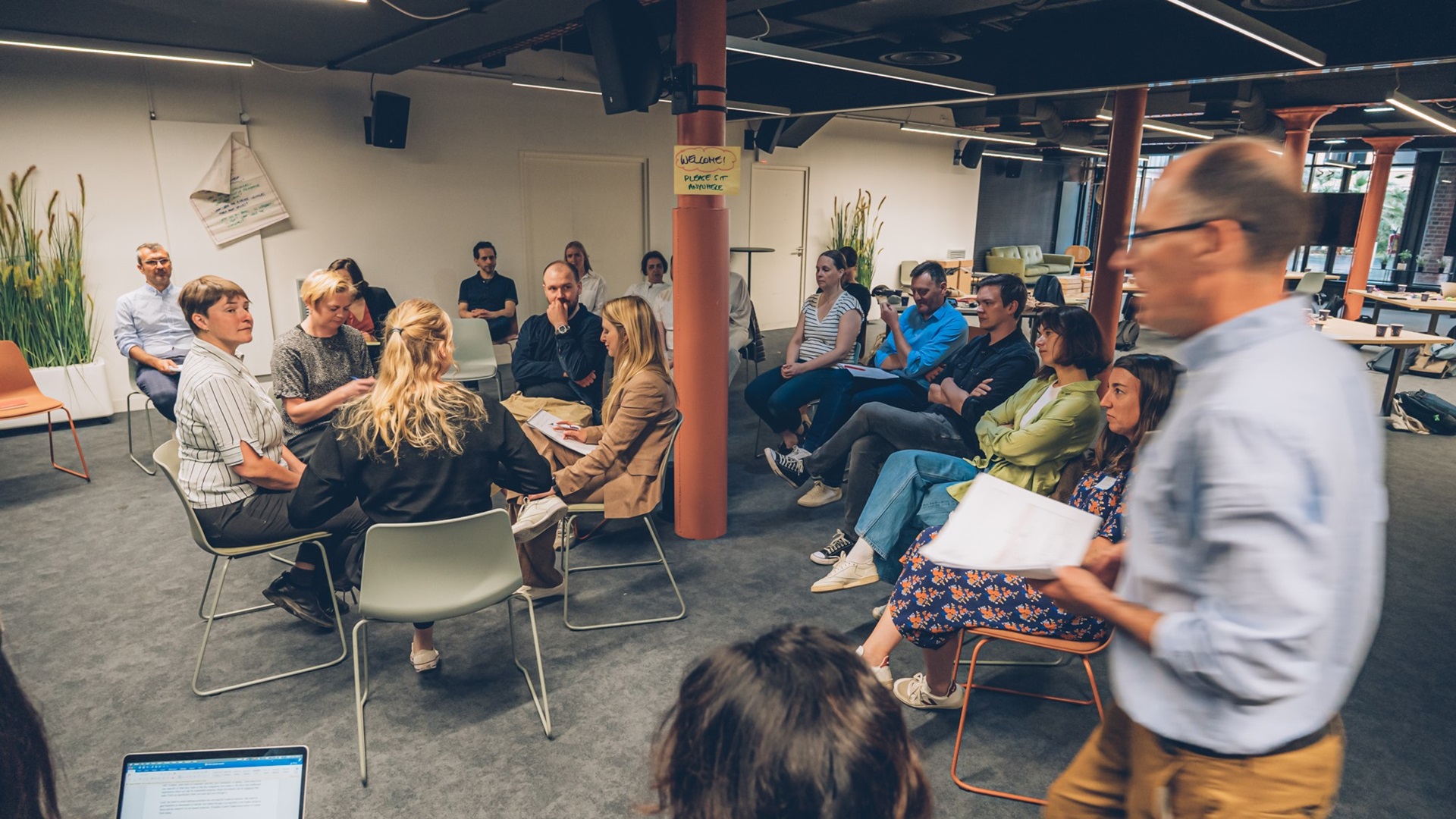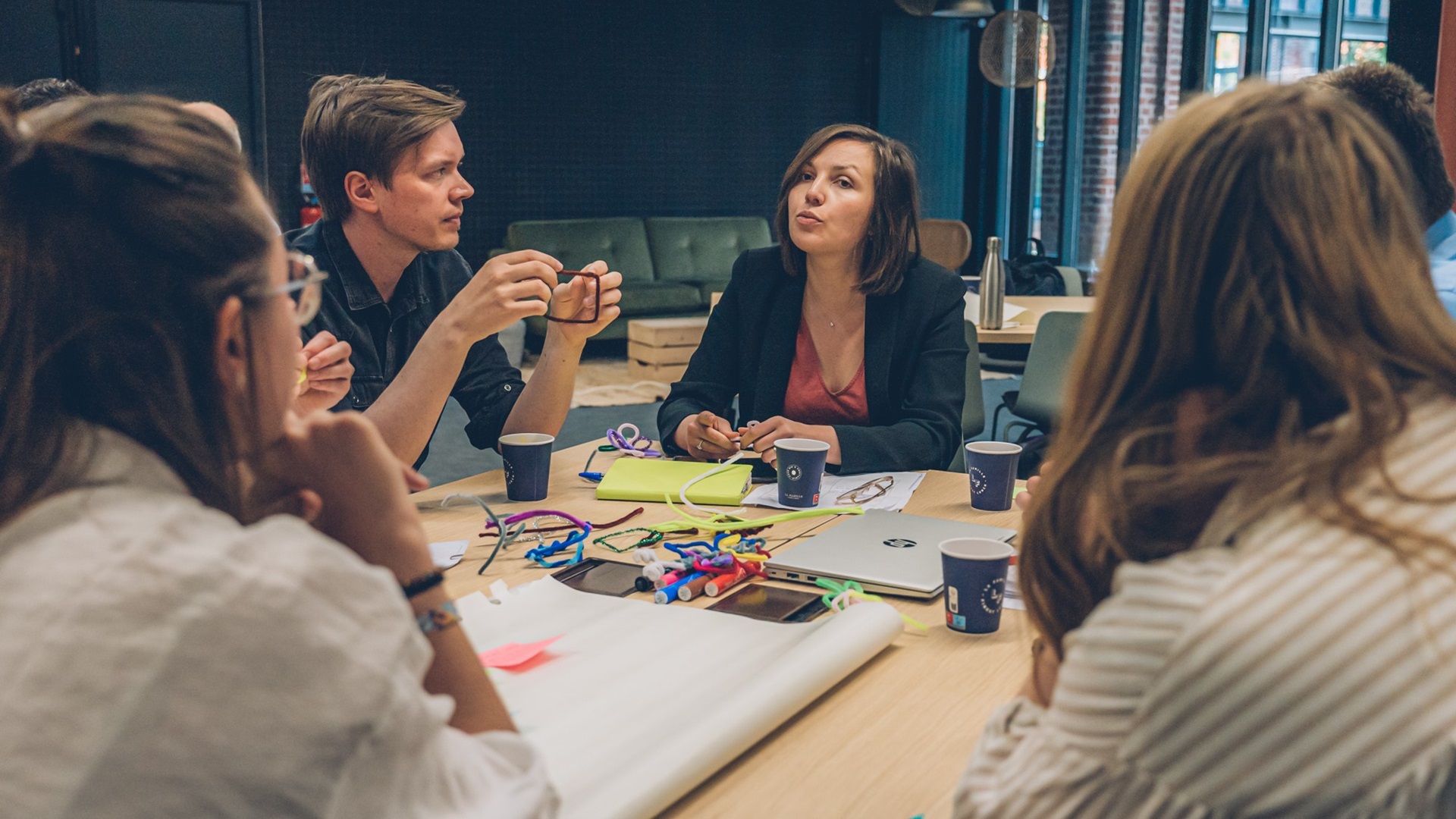
A collaborative and creative day of strategic discussions in Brussels – ToP facilitation case study

“Over the course of this collaborative and creative day, we engaged in strategic discussions about how to leverage impactful advocacy and the organisation’s agenda for action. Excited for what’s ahead and proud of what we’ve accomplished together!” Architects’ Council of Europe (ACE-CAE) on LinkedIn

Context

I was approached in May 2024 by the Architects’ Council of Europe Secretary General Ian Pritchard and Head of Communications Julie Deutschmann, to facilitate a strategy retreat with the ACE/CAE Executive Board in Brussels in June. They approached me after I had facilitated a similar strategy meeting for ACE in October 2020, online – see Recommendations & case studies.

It was planned for the eleven members of the ACE Board and 3-4 key Secretariat staff to gather for a one full-day strategy meeting on 21 June in Brussels, some 3½ years since that last facilitated strategy session online.

A draft agenda had been prepared, and notes of preparatory work done in advance including a summary of research and member consultation to identify and map critical themes that might be included in the strategy.

Aims

In conversation with Ian and Julie, and ACE President Ruth Schagemann and Senior Policy Officer Pierre Obajtek, the aims of the day were agreed to be as follows:

  • To reflect on, appreciate, and learn from ACE’s recent activity and outcomes together, in the context of its changing strategic landscape;
  • To develop the basis of a new 5 year strategy, including a review of the ACE core values, mission & vision and agreement on strategic objectives and critical themes;
  • To review and consider implications for ACE’s internal operating environment, strategy implementation and communication;
  • To build shared clarity, confidence and commitment to the way forward together.

Methodology and approach

For this assignment, I proposed to draw on the following of ICA’s ToP methods in particular:

The Focused Conversation method provides a structured, four-level process for effective communication which ensures that everyone in a group has the opportunity to participate.

The Consensus Workshop method is a five-stage process that incorporates Focused Conversation for effective communication and that enables a facilitator to draw out and weave together everybody’s wisdom into a clear consensus.

The Historical Scan method adapts these two methods to provide a powerful, visual way to enable a group to build a shared picture of their journey together, in historical and strategic context, to learn from their past and present in order to prepare for their future.

The ToP Participatory Strategic Planning process is a 4-stage process, each stage involving a specially tailored ToP Consensus Workshop process. The four stages are:

  1. Practical Vision – what the group would like to see in place in 3-5 years’ time as a result of successfully delivering the new strategy,
  2. Underlying Contradictions – the obstacles or issues in current reality that are preventing that vision from happening, which must be dealt with in order to move forward,
  3. Strategic Directions – innovative courses of action that the group can take to deal with the underlying contradictions and move it toward realising its vision,
  4. Implementation Plan – a set of practical actions that will start the group’s journey from where it is to where it wants to be. A clear outline of will be done, why, how, when and by whom.

These four workshops are preceded as appropriate by clarifying the parameters of the strategy, including mission and purpose, and by ‘reviewing the past to prepare for the future’, including internal & external strategic context.

To adapt and apply such an approach to a single, one-day in-person workshop for ACE, I proposed to use the Consensus Workshop method in full for the Practical Vision stage of the planning process, and a quicker and less rigorous approach to the Underlying Contradictions and Strategic Directions, in order to accomplish all of those and the Historical Scan as well in the one day.

Agenda & process

9.00 Arrivals & coffee
9.30 Opening & overview – introductions & expectations; approach, aims & agenda

Context & parameters – review advance preparation, research & consultation;  confirm ACE core values, mission & vision

10.15 Reviewing the past to prepare for the future – ‘Historical Scan’ exercise, in the light of our research & consultation:

“What are key events, accomplishments & milestones in the recent history of ACE and it’s strategic landscape? What can we appreciate and what can we learn?”

11.15 Break
11.30 Practical Vision – ‘Consensus Workshop’, in the light of our research & consultation:

“What do we want to see in place in 5 years’ time, as a result of successfully delivering the new ACE strategy?”

13.00 Lunch
14.00 Current Reality SWOT analysis, in the light of our research & consultation:

“What strengths & opportunities may help our vision to be realised, and what weaknesses & threats may hinder it?”

15.00 Break
15.15 Strategic Directions:

“What are implications for ACE for the next 5 years, and for implementation in 2024-25 in particular – for Strategic Objectives & Critical Themes, for the internal operating environment and for strategy implementation and communication? 

-17.00 Next steps, evaluation, reflection & close

Feedback and impact

Participants’ on-site feedback included:

  • Dynamic, engaging, inclusive
  • Good to have time for debate and discussion
  • New perspectives
  • Well prepared

Architects’ Council of Europe (ACE-CAE) posted soon afterwards on LinkedIn:

The ACE Executive Board came together in #Brussels to #brainstorm and pave the path for the future of the organisation.

Strategic workshops are not just about planning for the future; they are about transforming vision into actionable steps, highlighted Ruth Schagemann, ACE President.

Over the course of this collaborative and creative day, we engaged in strategic discussions about how to leverage impactful advocacy and the organisation’s agenda for action.  Excited for what’s ahead and proud of what we’ve accomplished together!


See also about mehow I workwho I work with and recommendations & case studies, and please contact me about how we might work together.

I’ve never been as inspired and energised – ToP facilitation case study

“I’ve never been as inspired and energised about the topic of data standards as I have been today with this fantastic group of people!” – Shelley Heckman on LinkedIn

Context

In late 2023 I was approached by Shelley Heckman of iStandUK to facilitate an away day of it’s Executive Board in London in March 2024.

The mission of iStandUK is to promote Data Standards that support efficiency, transformation, and transparency of local public services in the UK. The Executive Board includes representatives from local authorities, government departments and other representative groups such as the LGA, SOCITM and TechUK. The Board serves as both a programme board and a leadership forum for collaboration across the local public sector.

The March away day was to build on another just held in December, which had been an opportunity for the Board to start exploring a strategic approach to digital standards for local public services.

At that first meeting the group had looked at the question ‘what are the specific needs and ambitions of public services that could be addressed by standards?’ A visioning exercise followed, which allowed the group to explore what would be the impact of data standards being implemented across all public sector organisations in a way that creates the most impact. The group then explored what would be necessary from our group to achieve the collective vision. The day culminated with a number of action commitments, including to create a specification for a data standards business case for the UK local public sector.

Aims

In conversation with Shelley, Board Chair Phil Swan and Programme Director Paul Davidson, the aims of the March away day were agreed to be as follows:

To build on the conversation started at the December away day, to articulate what we are ready to commit to in relation to:

    • building a vehicle that supports interoperable standards across local government at a national level, what it might look like and the way forward to get there,
    • commissioning a scoping exercise for a vehicle for data standards, and the draft Specification paper,
    • iStandUK and its future, as that vehicle and/or otherwise.

To build upon the collective sense of the importance and urgency of interoperable data standards for the sector that was recognised in December, and to build commitment to influence budget holders to invest funds in a standards body.

Methodology and approach

For this assignment, I proposed to draw on the following of ICA’s Technology of Participation (ToP) methods in particular:

The Focused Conversation method provides a structured, four-level process for effective communication which ensures that everyone in a group has the opportunity to participate.

The Consensus Workshop method is a five-stage process that incorporates Focused Conversation for effective communication and that enables a facilitator to draw out and weave together everybody’s wisdom into a clear consensus.

Agenda & process

10:00 Arrivals & welcome refreshments
10:30 Opening, welcome & introductions; approach, aims & agenda

Our hopes & aspirations for today

11.00 The story so far – what do we know?

  • December workshop & outputs
  • December commitments & actions
  • Draft specification paper – Paul Davidson
  • iStandUK position – Phil Swan

Reflection

12.00 Lunch
12.30 Our commitment – ‘Consensus Workshop’

What do we hope that we are all ready to commit to – in relation building a vehicle, commissioning a scoping exercise, and iStandUK & its future?

What do we find that we are in fact ready to commit to? Are we ready to commit to work with such a vehicle? To help to fund it?

2.00 Break
2.15 Implications & next steps

What does this mean – for building a vehicle, commissioning a scoping exercise, iStandUK & its future, otherwise?

3.15 Reflection & close

What went well? What could have gone better?

3:30 End

Feedback and impact

Participants’ on-site feedback included:

  • Open and collaborative atmosphere
  • Energy and commitment from everyone
  • Great collaboration, great networking, great outcomes
  • Made more progress than I would have expected in time available
  • We got a better output than I expected
  • Excellent facilitation

Shelley wrote soon afterwards on LinkedIn:

I’ve never been as inspired and energised about the topic of data standards as I have been today with this fantastic group of people!

The iStandUK Executive Board met in London to talk ambitiously about our collective commitment to data standards for public services.


See also about mehow I workwho I work with and recommendations & case studies, and please contact me about how we might work together.

Free facilitation webinar: the Art of Focused Conversation with Jo Nelson

Scroll down for the session recording and slides – with thanks to the 40 or so who attended!


Monday, 16 December 2024, 15:00-16:00 UK time

“If you have ever wondered what questions to ask, or in what order to ask them, to lead a conversation that is focused, intentional, inclusive, and productive, let this book be your guide.” – Martin Gilbraith

Have you ever wondered how to have a conversation that is focused, intentional, inclusive, and productive?

Join us to connect, share & learn on Monday, 16 December 2024, 15:00-16:00 UK time, for this special session following the format of the ICA:UK Online Focused Conversation Series.

We shall be joined by Jo Nelson, General Editor of the new, second edition of The Art of Focused Conversation: More Than 100 Ways to Access Group Wisdom in Your Organization. This bestselling, essential guide to designing and leading useful and effective group conversations, first published in 2000 and reprinted 20 times since then, is now completely revised and updated.

Jo is a ICA Certified ToP Facilitator, a founding member of the International Association of Facilitators (IAF), and an IAF Certified Professional Facilitator Emeritus.

An experiential introduction to the method will enable you to connect, share and learn with each other from your own experience of conversations that you have found challenging. Jo will then share some insights from the book, and both of us from our own experience, and there will be time for questions and discussion.

The session will serve as an introduction to the method for those new to ICA’s Technology of Participation (ToP), and an opportunity to deepen their understanding for those who have already read the first edition of the book or attended our popular Group Facilitation Methods course. See also my own blog post Four steps to a universal principle of facilitation and learning.

The session will be recorded, with the recording being publicly available after the session is over. If you do not wish to be identifiable, we will give you the option before we start the recording to turn off your camera and change your screen name.

Join us to connect, share & learn!


For recordings and other outputs of previous online Focused Conversation sessions and other free facilitation webinars, see free facilitation webinars.

See also about me, how I work, who I work with and recommendations & case studies, and please contact me about how we might work together.

Dramatically Reducing Embodied Carbon in Europe’s Built Environment – ToP facilitation case study

The Carbon Neutral Cities Alliance (CNCA) is a collaboration of leading global cities working to achieve carbon neutrality in the next 10-20 years – the most aggressive Greenhouse Gas (GHG) reduction targets undertaken anywhere by any city.

CNCA’s mission is to mobilize transformative climate action in cities in order to achieve prosperity, social equity, resilience and better quality of life for all on a thriving planet.

Context

In March 2023 I was approached by Irene Garcia of the Carbon Neutral Cities Alliance (CNCA) to facilitate a 3-day event in Lille in June. In her first draft agenda she wrote:

“The project “Dramatically Reducing Embodied Carbon in Europe’s Built Environment” led by Carbon Neutral Cities Alliance (CNCA) aims to organize an in-person meeting in 2023 gathering the cities participating in the project.

The program will focus on developing an understanding of what the built environment looks like today in European cities, what are the main drivers and game changers to have the highest potential to produce deep, durable GHG emissions reductions in key systems at a “transformational” scale, and what efforts and policy changes would be required for cities to double down efforts on its decarbonization.

Recognizing the urgency, magnitude and multi-level nature of the change required in the built environment, the meeting will provide room for multi-level conversations with national and EU stakeholders. The organizations leading the national work in France, Finland and Scotland, as well the European work will be invited to join and contribute to the discussions.

Further, the programme will showcase to participants the hosts’ stellar projects to address embodied carbon and/or increase the use of bio-based materials, and seek to engage key community stakeholders involved in the projects that the group will visit.

The results of the workshop will feed into the ongoing project of CNCA and will influence future work from 2024 onwards.”

I learned in conversation with Irene that it would be only the second in-person, and final, meeting of a three-year project where cities have been participating to get policy support to address embodied carbon and increase the use of bio-based materials in their built environment.  The group had had bi-monthly online meetings that would continue to the end of 2023. She hoped to use this final in-person meeting to create a moment where all participants could reflect together on where cities were at the moment, share their insights and approaches in a meaningful way that resonates and co-create some solutions to specific challenges they were currently facing.

Participants would be mostly city officials, including climate directors or technical staff in charge of the built environment. We would also have some participants dealing with the built environment at the national and EU level, as well as the project’s funder.  She expected a group of up to 30 people, and the hosting city would provide meeting space.  A photographer and videographer would help to record the meeting for publicity purposes.

Aims

In conversation, the aims of the meeting were agreed as follows:

  • to reflect and learn together on where cities are at the moment, and co-create solutions to specific challenges they are currently facing – in particular, what are the main drivers and game changers, and what efforts and policy changes would be required,
  • to provide room for multi-level conversations, including those leading the national work in France, Finland and Scotland,
  • to share top-notch practices in a meaningful way that resonates, to think out of the box and untap all the knowledge in the room,
  • to inform the ongoing project of CNCA and identify support that cities need from 2024 onwards,
  • to inspire, energise and enthuse, and build a sense of shared trust, commitment and mutual support.

Methodology and approach

I proposed to draw on the following three of ICA’s Technology of Participation (ToP) methods in particular, plus other methods and tools as appropriate:

The Focused Conversation method provides a structured, four-level process for effective communication which ensures that everyone in a group has the opportunity to participate.

The Consensus Workshop method is a five stage process that enables a facilitator to draw out and weave together everybody’s wisdom into a clear and practical consensus.

The Participatory Strategic Planning process is a 5-stage process, each stage typically involving a specially tailored Consensus Workshop process.

Design, adaptation and delivery

A key aspect of the meeting’s design was to work in three different venues around the city, each selected by the host city to highlight different aspects of building decarbonization—a central theme of the sessions. This added a dynamic layer to the event and allowed participants to fully experience the city’s commitment to sustainability.

I wasn’t able to visit the rooms in advance of designing the agenda and process, however I received pictures of the venue and I was able to arrive early on each day to set up the layout and adapt the methodology to suit each space.  I was able to arrive in Lille early enough to view the first room on the afternoon before the meeting began, and the group’s site visits allowed me time during the meeting to plan and prepare in advance how best to make use of the other two.

In the end I was (just) able to use the Consensus Workshop method for a vision workshop, as I had proposed. I used the ToP Participatory Strategic Planning process as a design framework for the flow of the following sessions, but took considerable liberties with the methods and tools used for each – in order to best align with the agreed aims of the event, as well as to align with what would work best in the spaces available. I used the Focused Conversation method for opening and closing conversations throughout, and as a design framework for the structure of individual sessions.

The event began on Tuesday in a large, multi-purpose function space opening on to the lobby of the modern Lille Metropole headquarters building (pictured). Cabaret style seating at pairs of tables served to accommodate an opening World Cafe conversation.

The rear of one of the doors from the lobby provided just enough space for a small sticky wall wide enough to accommodate a vision workshop using the Consensus Workshop method, by clustering cards in columns instead of groups. Delegates sat at their World Cafe tables to brainstorm and write their ideas on cards, and they stood at smaller, high tables for the clustering of cards and naming of clusters at the sticky wall.

After lunch was a slide presentation of the City Handbook for Building Carbon Neutral Buildings, followed by questions and discussion, and then the group left for their first site visit at Blanchemaille while I turned my attention to the space we would be using the next day.

On Wednesday we met at the site of that afternoon’s visit at EuraTechnologies, a refurbished factory building. The large meeting room (pictured) was able to accommodate circles of chairs at one end, for a Fishbowl conversation on challenges in the morning, and cabaret style seating at pairs of tables for working on strategies and implementation the afternoon.

Once again, the many pillars in the room were not too much of an obstacle to people being able to see each other. A large, flat expanse of wall space by the window was able to accommodate a larger sticky wall. That was useful for displaying flip charts after they had been presented to the group, even though it was not central to the seating area and so not easily visible from all tables.

A large screen TV was available for short slide presentations illustrating strategies for success.  As the group took their visit around the site at the end of the day, I returned to the hotel to prepare the space for final morning on Thursday.

On Thursday morning we met in the delightful former chapel of the charming and historic L’Hermitage Gantois (pictured), the hotel where delegates had been staying.

The space was very much larger than necessary, it had poor accoustics and nothing could be attached to the walls. However, the projector screen worked well enough to accommodate a sticky wall for the purpose of convening an Open Space style workshop, as did the banqueting style tables. As delegates left throughout the morning for their trips home, it was very convenient to be located at the hotel rather than somewhere else.

Feedback and impact

Participants’ on-site feedback included:

  • Room for discussions and disagreement
  • A good flow and engagement of the group within the sessions
  • Capacity to listen to each other
  • Everyone can participate
  • Open conversation and sharing of knowledge
  • Not many presentation but discussions
  • Very nice & rich programme, great contributions!
  • Good solutions, focused final session!
  • New insights & contacts
  • Dessert

Irene wrote soon after the workshop, on LinkedIn:

Really inspiring to witness first hand the tremendous progress that European cities are making to decarbonize the built environment. And how every year they keep breaking new ground over what gets to be constructed and how to mainstream sustainable buildings and dramatically reduce their embodied carbon.

She added in October 2024:

I had the pleasure of working with Martin Gilbraith for a 3-day event in Lille in June 2023 as part of the “Dramatically Reducing Embodied Carbon in Europe’s Built Environment” project, led by the Carbon Neutral Cities Alliance (CNCA). His facilitation skills played a crucial role in guiding multi-level conversations among participants. He was instrumental in organizing the flow of the sessions and seamlessly adapted to the unique needs of the group, making sure that the voices of all stakeholders were given due consideration. His preparation, energy, and professionalism enabled us to dive deeply into the complexities of decarbonizing the built environment, and the results of this workshop were wonderful.

Credit: video and photos as indicated by Fabrice Caterini, Inediz.


See also about mehow I workwho I work with and recommendations & case studies, and please contact me about how we might work together.

The Art of Focused Conversation, Second Edition: More Than 100 Ways to Access Group Wisdom in Your Organization

“Questions are the primary tool of the facilitator. If you have ever wondered what questions to ask, or in what order to ask them, to lead a conversation that is focused, intentional, inclusive, and productive, let this book be your guide.

I was once asked if there is such a thing as a universal principle of facilitation — mine is ORID, the powerful, foundational model of this ToP Focused Conversation method.” – Martin Gilbraith


by R. Brian Stanfield and Jo Nelson

The essential, bestselling guide to designing and leading useful and effective group conversations is now completely revised and updated.

The Art of Focused Conversation is the quintessential theoretical and practical guide to group communication and participatory decision-making. Incorporating over 60 years of meticulous research and collaborative development, this perennial, international bestseller is an indispensable addition to any facilitator’s toolkit.

The Focused Conversation Method at the heart of The Art of Focused Conversation is a core component of the Technology of Participation (ToP) methodology developed by the Institute of Cultural Affairs. The original book is widely regarded as a key resource for designing and leading useful and effective conversations and fostering consensus and collaboration. This fully updated and revised edition includes:

  • Preparation and guidelines for discussing challenging topics and facilitating a focused conversation
  • A comprehensive overview of the ORID framework, made up of Objective, Reflective, Interpretive, and Decisional questions which guide a group to wise decisions
  • In-depth analysis of how the underlying structure of ToP is based on applied phenomenology and is supported by the latest findings in neuroscience and social psychology
  • New sections on diversity, equity, and inclusion; work-life balance; conflict resolution; and guiding focused conversations online
  • 125 sample conversations that can be adapted to any situation.

Invigorate and elevate your group process with this invaluable resource—required reading for facilitators, leaders, educators, and anyone who wants to think clearly and guide thoughtful conversations.

Brian Stanfield was an educator, researcher, and Director of Publications at the Canadian Institute of Cultural Affairs. Editor of the first edition of The Art of Focused Conversation and The Workshop Book and author of The Courage to Lead, Brian made a lasting contribution to the use of participatory practices in facilitation. He died in 2006.

Jo Nelson worked with the Institute of Cultural Affairs for 50 years, leading participatory development projects and designing and teaching ToP facilitator training programs. She was a contributor to the first edition of The Art of Focused Conversation and is author of The Art of Focused Conversation for Schools and Getting to the Bottom of ToP.

Pre-ordering is available at a discount until September 10 – order from New Society Publishers or Amazon.


See also about mehow I workwho I work with and recommendations & case studies, and please contact me about how we might work together.