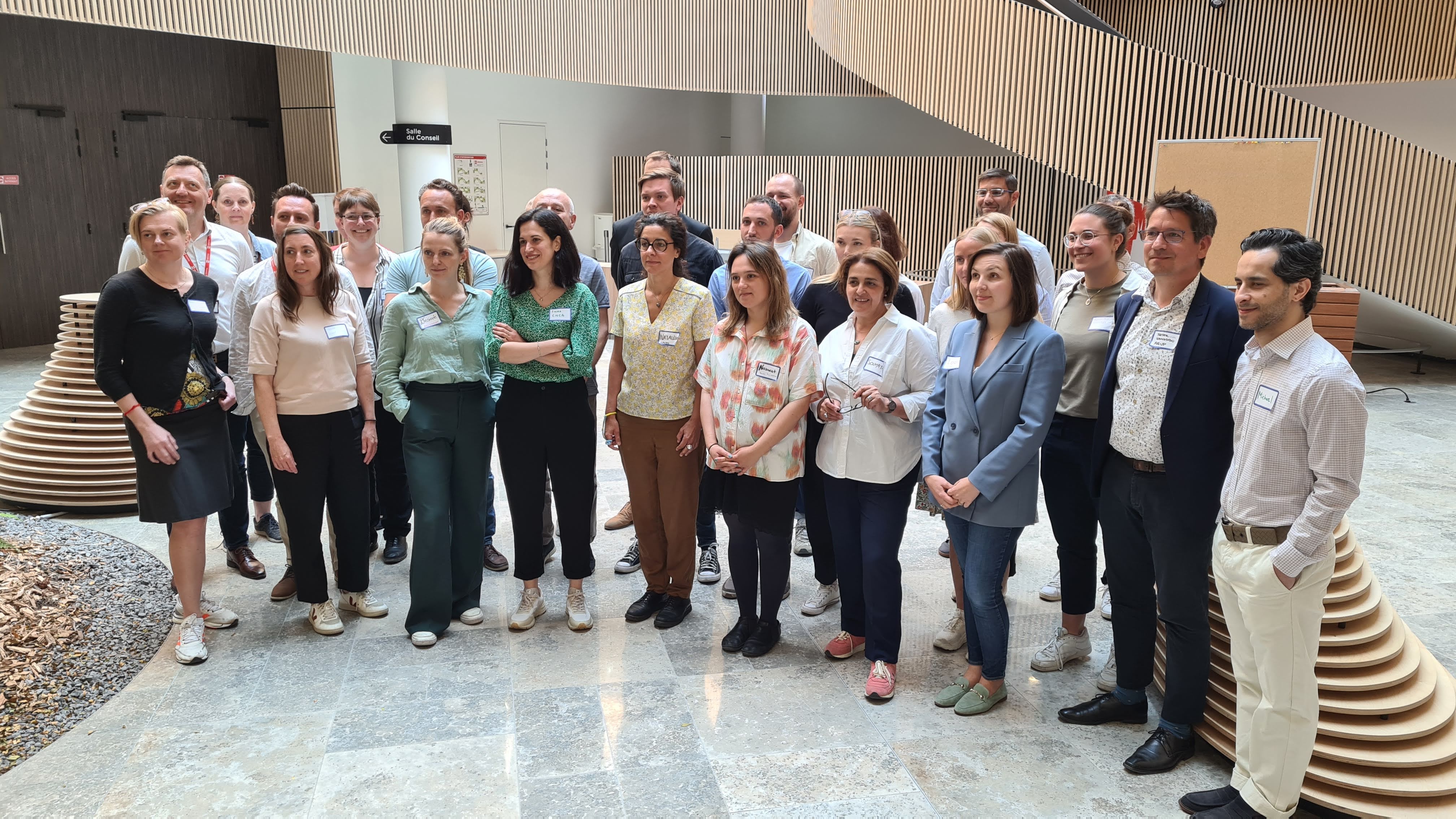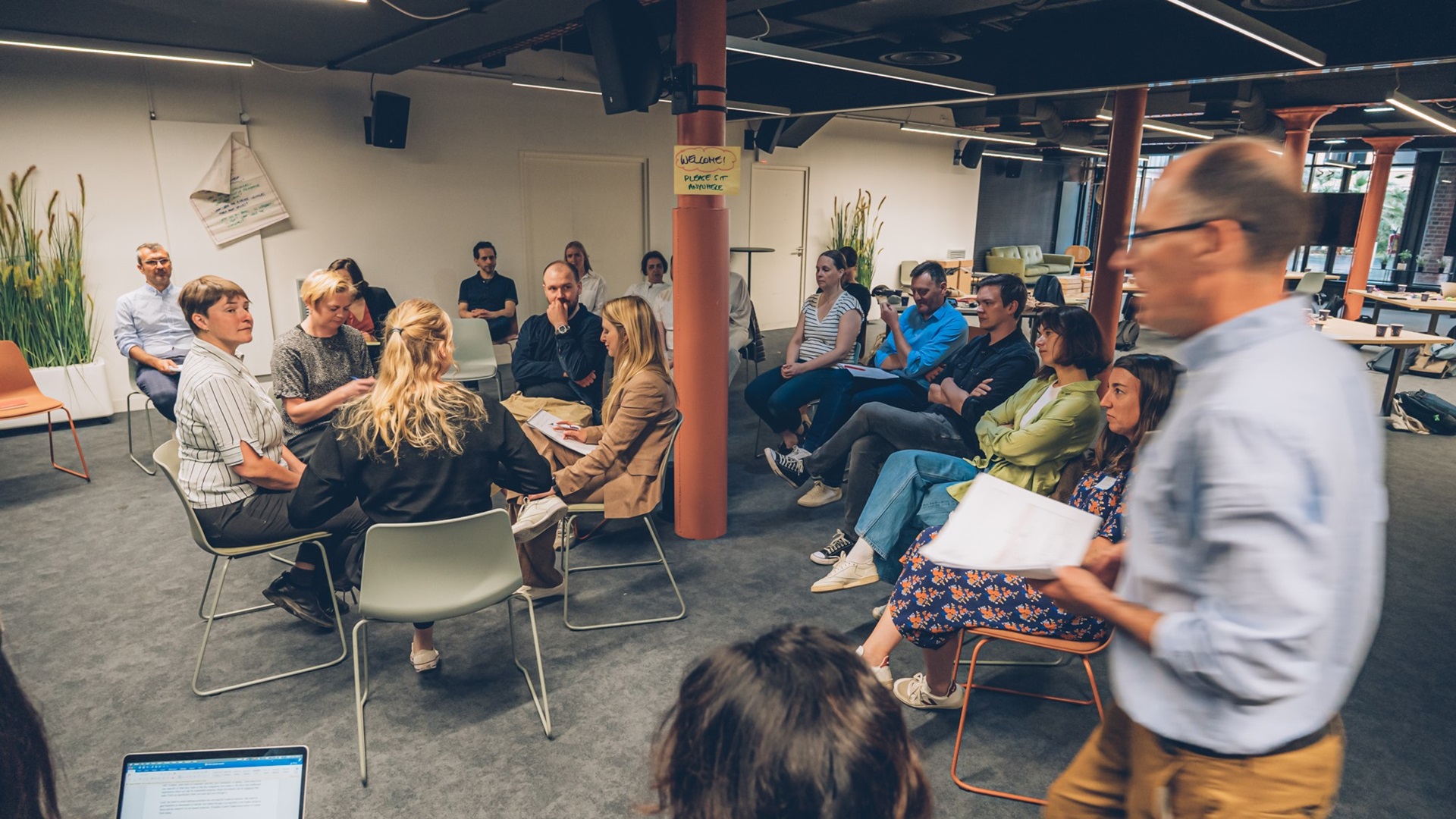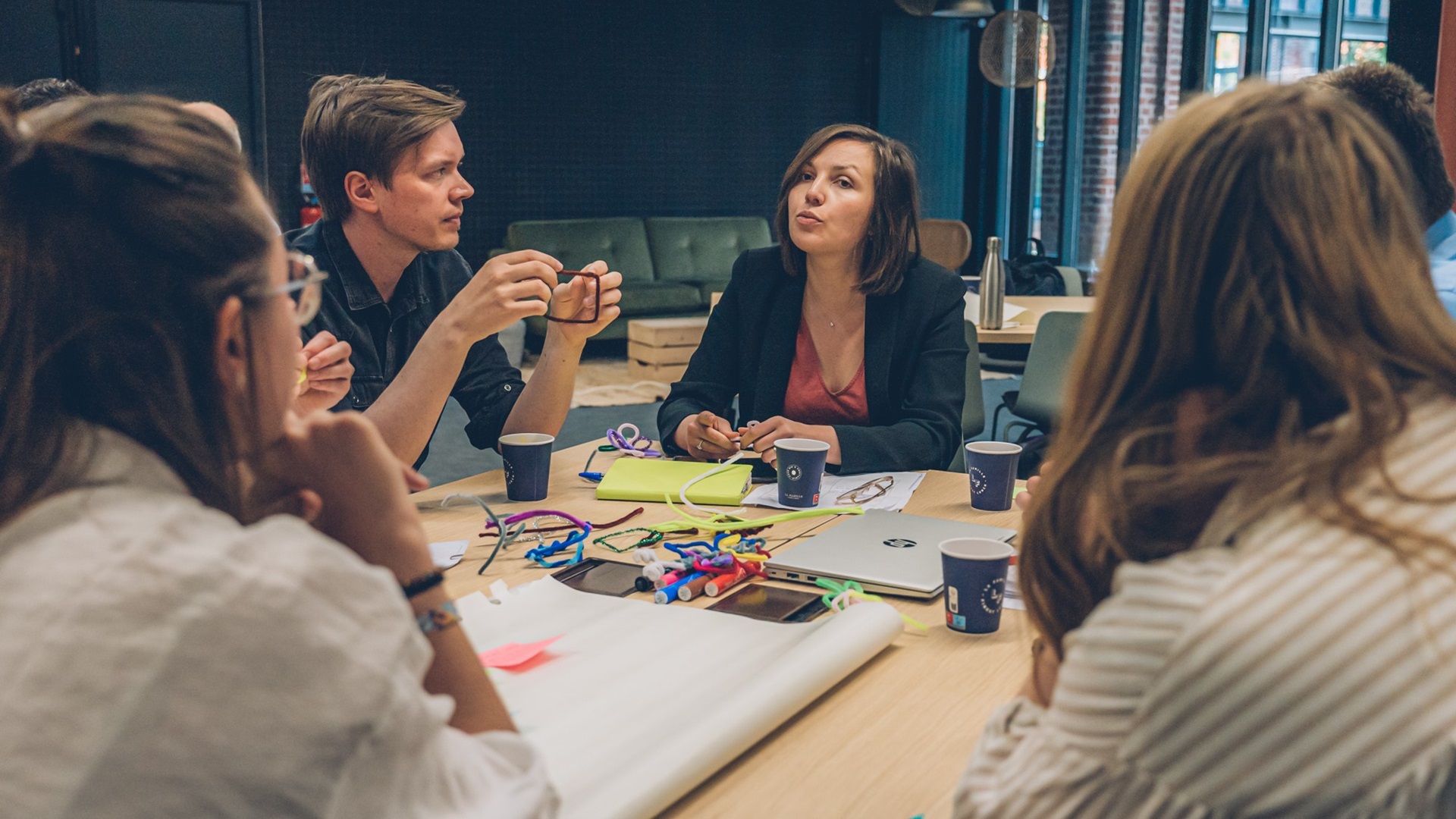
A collaborative and creative day of strategic discussions in Brussels – ToP facilitation case study

“Over the course of this collaborative and creative day, we engaged in strategic discussions about how to leverage impactful advocacy and the organisation’s agenda for action. Excited for what’s ahead and proud of what we’ve accomplished together!” Architects’ Council of Europe (ACE-CAE) on LinkedIn

Context

I was approached in May 2024 by the Architects’ Council of Europe Secretary General Ian Pritchard and Head of Communications Julie Deutschmann, to facilitate a strategy retreat with the ACE/CAE Executive Board in Brussels in June. They approached me after I had facilitated a similar strategy meeting for ACE in October 2020, online – see Recommendations & case studies.

It was planned for the eleven members of the ACE Board and 3-4 key Secretariat staff to gather for a one full-day strategy meeting on 21 June in Brussels, some 3½ years since that last facilitated strategy session online.

A draft agenda had been prepared, and notes of preparatory work done in advance including a summary of research and member consultation to identify and map critical themes that might be included in the strategy.

Aims

In conversation with Ian and Julie, and ACE President Ruth Schagemann and Senior Policy Officer Pierre Obajtek, the aims of the day were agreed to be as follows:

  • To reflect on, appreciate, and learn from ACE’s recent activity and outcomes together, in the context of its changing strategic landscape;
  • To develop the basis of a new 5 year strategy, including a review of the ACE core values, mission & vision and agreement on strategic objectives and critical themes;
  • To review and consider implications for ACE’s internal operating environment, strategy implementation and communication;
  • To build shared clarity, confidence and commitment to the way forward together.

Methodology and approach

For this assignment, I proposed to draw on the following of ICA’s ToP methods in particular:

The Focused Conversation method provides a structured, four-level process for effective communication which ensures that everyone in a group has the opportunity to participate.

The Consensus Workshop method is a five-stage process that incorporates Focused Conversation for effective communication and that enables a facilitator to draw out and weave together everybody’s wisdom into a clear consensus.

The Historical Scan method adapts these two methods to provide a powerful, visual way to enable a group to build a shared picture of their journey together, in historical and strategic context, to learn from their past and present in order to prepare for their future.

The ToP Participatory Strategic Planning process is a 4-stage process, each stage involving a specially tailored ToP Consensus Workshop process. The four stages are:

  1. Practical Vision – what the group would like to see in place in 3-5 years’ time as a result of successfully delivering the new strategy,
  2. Underlying Contradictions – the obstacles or issues in current reality that are preventing that vision from happening, which must be dealt with in order to move forward,
  3. Strategic Directions – innovative courses of action that the group can take to deal with the underlying contradictions and move it toward realising its vision,
  4. Implementation Plan – a set of practical actions that will start the group’s journey from where it is to where it wants to be. A clear outline of will be done, why, how, when and by whom.

These four workshops are preceded as appropriate by clarifying the parameters of the strategy, including mission and purpose, and by ‘reviewing the past to prepare for the future’, including internal & external strategic context.

To adapt and apply such an approach to a single, one-day in-person workshop for ACE, I proposed to use the Consensus Workshop method in full for the Practical Vision stage of the planning process, and a quicker and less rigorous approach to the Underlying Contradictions and Strategic Directions, in order to accomplish all of those and the Historical Scan as well in the one day.

Agenda & process

9.00 Arrivals & coffee
9.30 Opening & overview – introductions & expectations; approach, aims & agenda

Context & parameters – review advance preparation, research & consultation;  confirm ACE core values, mission & vision

10.15 Reviewing the past to prepare for the future – ‘Historical Scan’ exercise, in the light of our research & consultation:

“What are key events, accomplishments & milestones in the recent history of ACE and it’s strategic landscape? What can we appreciate and what can we learn?”

11.15 Break
11.30 Practical Vision – ‘Consensus Workshop’, in the light of our research & consultation:

“What do we want to see in place in 5 years’ time, as a result of successfully delivering the new ACE strategy?”

13.00 Lunch
14.00 Current Reality SWOT analysis, in the light of our research & consultation:

“What strengths & opportunities may help our vision to be realised, and what weaknesses & threats may hinder it?”

15.00 Break
15.15 Strategic Directions:

“What are implications for ACE for the next 5 years, and for implementation in 2024-25 in particular – for Strategic Objectives & Critical Themes, for the internal operating environment and for strategy implementation and communication? 

-17.00 Next steps, evaluation, reflection & close

Feedback and impact

Participants’ on-site feedback included:

  • Dynamic, engaging, inclusive
  • Good to have time for debate and discussion
  • New perspectives
  • Well prepared

Architects’ Council of Europe (ACE-CAE) posted soon afterwards on LinkedIn:

The ACE Executive Board came together in #Brussels to #brainstorm and pave the path for the future of the organisation.

Strategic workshops are not just about planning for the future; they are about transforming vision into actionable steps, highlighted Ruth Schagemann, ACE President.

Over the course of this collaborative and creative day, we engaged in strategic discussions about how to leverage impactful advocacy and the organisation’s agenda for action.  Excited for what’s ahead and proud of what we’ve accomplished together!


See also about mehow I workwho I work with and recommendations & case studies, and please contact me about how we might work together.

I’ve never been as inspired and energised – ToP facilitation case study

“I’ve never been as inspired and energised about the topic of data standards as I have been today with this fantastic group of people!” – Shelley Heckman on LinkedIn

Context

In late 2023 I was approached by Shelley Heckman of iStandUK to facilitate an away day of it’s Executive Board in London in March 2024.

The mission of iStandUK is to promote Data Standards that support efficiency, transformation, and transparency of local public services in the UK. The Executive Board includes representatives from local authorities, government departments and other representative groups such as the LGA, SOCITM and TechUK. The Board serves as both a programme board and a leadership forum for collaboration across the local public sector.

The March away day was to build on another just held in December, which had been an opportunity for the Board to start exploring a strategic approach to digital standards for local public services.

At that first meeting the group had looked at the question ‘what are the specific needs and ambitions of public services that could be addressed by standards?’ A visioning exercise followed, which allowed the group to explore what would be the impact of data standards being implemented across all public sector organisations in a way that creates the most impact. The group then explored what would be necessary from our group to achieve the collective vision. The day culminated with a number of action commitments, including to create a specification for a data standards business case for the UK local public sector.

Aims

In conversation with Shelley, Board Chair Phil Swan and Programme Director Paul Davidson, the aims of the March away day were agreed to be as follows:

To build on the conversation started at the December away day, to articulate what we are ready to commit to in relation to:

    • building a vehicle that supports interoperable standards across local government at a national level, what it might look like and the way forward to get there,
    • commissioning a scoping exercise for a vehicle for data standards, and the draft Specification paper,
    • iStandUK and its future, as that vehicle and/or otherwise.

To build upon the collective sense of the importance and urgency of interoperable data standards for the sector that was recognised in December, and to build commitment to influence budget holders to invest funds in a standards body.

Methodology and approach

For this assignment, I proposed to draw on the following of ICA’s Technology of Participation (ToP) methods in particular:

The Focused Conversation method provides a structured, four-level process for effective communication which ensures that everyone in a group has the opportunity to participate.

The Consensus Workshop method is a five-stage process that incorporates Focused Conversation for effective communication and that enables a facilitator to draw out and weave together everybody’s wisdom into a clear consensus.

Agenda & process

10:00 Arrivals & welcome refreshments
10:30 Opening, welcome & introductions; approach, aims & agenda

Our hopes & aspirations for today

11.00 The story so far – what do we know?

  • December workshop & outputs
  • December commitments & actions
  • Draft specification paper – Paul Davidson
  • iStandUK position – Phil Swan

Reflection

12.00 Lunch
12.30 Our commitment – ‘Consensus Workshop’

What do we hope that we are all ready to commit to – in relation building a vehicle, commissioning a scoping exercise, and iStandUK & its future?

What do we find that we are in fact ready to commit to? Are we ready to commit to work with such a vehicle? To help to fund it?

2.00 Break
2.15 Implications & next steps

What does this mean – for building a vehicle, commissioning a scoping exercise, iStandUK & its future, otherwise?

3.15 Reflection & close

What went well? What could have gone better?

3:30 End

Feedback and impact

Participants’ on-site feedback included:

  • Open and collaborative atmosphere
  • Energy and commitment from everyone
  • Great collaboration, great networking, great outcomes
  • Made more progress than I would have expected in time available
  • We got a better output than I expected
  • Excellent facilitation

Shelley wrote soon afterwards on LinkedIn:

I’ve never been as inspired and energised about the topic of data standards as I have been today with this fantastic group of people!

The iStandUK Executive Board met in London to talk ambitiously about our collective commitment to data standards for public services.


See also about mehow I workwho I work with and recommendations & case studies, and please contact me about how we might work together.

Dramatically Reducing Embodied Carbon in Europe’s Built Environment – ToP facilitation case study

The Carbon Neutral Cities Alliance (CNCA) is a collaboration of leading global cities working to achieve carbon neutrality in the next 10-20 years – the most aggressive Greenhouse Gas (GHG) reduction targets undertaken anywhere by any city.

CNCA’s mission is to mobilize transformative climate action in cities in order to achieve prosperity, social equity, resilience and better quality of life for all on a thriving planet.

Context

In March 2023 I was approached by Irene Garcia of the Carbon Neutral Cities Alliance (CNCA) to facilitate a 3-day event in Lille in June. In her first draft agenda she wrote:

“The project “Dramatically Reducing Embodied Carbon in Europe’s Built Environment” led by Carbon Neutral Cities Alliance (CNCA) aims to organize an in-person meeting in 2023 gathering the cities participating in the project.

The program will focus on developing an understanding of what the built environment looks like today in European cities, what are the main drivers and game changers to have the highest potential to produce deep, durable GHG emissions reductions in key systems at a “transformational” scale, and what efforts and policy changes would be required for cities to double down efforts on its decarbonization.

Recognizing the urgency, magnitude and multi-level nature of the change required in the built environment, the meeting will provide room for multi-level conversations with national and EU stakeholders. The organizations leading the national work in France, Finland and Scotland, as well the European work will be invited to join and contribute to the discussions.

Further, the programme will showcase to participants the hosts’ stellar projects to address embodied carbon and/or increase the use of bio-based materials, and seek to engage key community stakeholders involved in the projects that the group will visit.

The results of the workshop will feed into the ongoing project of CNCA and will influence future work from 2024 onwards.”

I learned in conversation with Irene that it would be only the second in-person, and final, meeting of a three-year project where cities have been participating to get policy support to address embodied carbon and increase the use of bio-based materials in their built environment.  The group had had bi-monthly online meetings that would continue to the end of 2023. She hoped to use this final in-person meeting to create a moment where all participants could reflect together on where cities were at the moment, share their insights and approaches in a meaningful way that resonates and co-create some solutions to specific challenges they were currently facing.

Participants would be mostly city officials, including climate directors or technical staff in charge of the built environment. We would also have some participants dealing with the built environment at the national and EU level, as well as the project’s funder.  She expected a group of up to 30 people, and the hosting city would provide meeting space.  A photographer and videographer would help to record the meeting for publicity purposes.

Aims

In conversation, the aims of the meeting were agreed as follows:

  • to reflect and learn together on where cities are at the moment, and co-create solutions to specific challenges they are currently facing – in particular, what are the main drivers and game changers, and what efforts and policy changes would be required,
  • to provide room for multi-level conversations, including those leading the national work in France, Finland and Scotland,
  • to share top-notch practices in a meaningful way that resonates, to think out of the box and untap all the knowledge in the room,
  • to inform the ongoing project of CNCA and identify support that cities need from 2024 onwards,
  • to inspire, energise and enthuse, and build a sense of shared trust, commitment and mutual support.

Methodology and approach

I proposed to draw on the following three of ICA’s Technology of Participation (ToP) methods in particular, plus other methods and tools as appropriate:

The Focused Conversation method provides a structured, four-level process for effective communication which ensures that everyone in a group has the opportunity to participate.

The Consensus Workshop method is a five stage process that enables a facilitator to draw out and weave together everybody’s wisdom into a clear and practical consensus.

The Participatory Strategic Planning process is a 5-stage process, each stage typically involving a specially tailored Consensus Workshop process.

Design, adaptation and delivery

A key aspect of the meeting’s design was to work in three different venues around the city, each selected by the host city to highlight different aspects of building decarbonization—a central theme of the sessions. This added a dynamic layer to the event and allowed participants to fully experience the city’s commitment to sustainability.

I wasn’t able to visit the rooms in advance of designing the agenda and process, however I received pictures of the venue and I was able to arrive early on each day to set up the layout and adapt the methodology to suit each space.  I was able to arrive in Lille early enough to view the first room on the afternoon before the meeting began, and the group’s site visits allowed me time during the meeting to plan and prepare in advance how best to make use of the other two.

In the end I was (just) able to use the Consensus Workshop method for a vision workshop, as I had proposed. I used the ToP Participatory Strategic Planning process as a design framework for the flow of the following sessions, but took considerable liberties with the methods and tools used for each – in order to best align with the agreed aims of the event, as well as to align with what would work best in the spaces available. I used the Focused Conversation method for opening and closing conversations throughout, and as a design framework for the structure of individual sessions.

The event began on Tuesday in a large, multi-purpose function space opening on to the lobby of the modern Lille Metropole headquarters building (pictured). Cabaret style seating at pairs of tables served to accommodate an opening World Cafe conversation.

The rear of one of the doors from the lobby provided just enough space for a small sticky wall wide enough to accommodate a vision workshop using the Consensus Workshop method, by clustering cards in columns instead of groups. Delegates sat at their World Cafe tables to brainstorm and write their ideas on cards, and they stood at smaller, high tables for the clustering of cards and naming of clusters at the sticky wall.

After lunch was a slide presentation of the City Handbook for Building Carbon Neutral Buildings, followed by questions and discussion, and then the group left for their first site visit at Blanchemaille while I turned my attention to the space we would be using the next day.

On Wednesday we met at the site of that afternoon’s visit at EuraTechnologies, a refurbished factory building. The large meeting room (pictured) was able to accommodate circles of chairs at one end, for a Fishbowl conversation on challenges in the morning, and cabaret style seating at pairs of tables for working on strategies and implementation the afternoon.

Once again, the many pillars in the room were not too much of an obstacle to people being able to see each other. A large, flat expanse of wall space by the window was able to accommodate a larger sticky wall. That was useful for displaying flip charts after they had been presented to the group, even though it was not central to the seating area and so not easily visible from all tables.

A large screen TV was available for short slide presentations illustrating strategies for success.  As the group took their visit around the site at the end of the day, I returned to the hotel to prepare the space for final morning on Thursday.

On Thursday morning we met in the delightful former chapel of the charming and historic L’Hermitage Gantois (pictured), the hotel where delegates had been staying.

The space was very much larger than necessary, it had poor accoustics and nothing could be attached to the walls. However, the projector screen worked well enough to accommodate a sticky wall for the purpose of convening an Open Space style workshop, as did the banqueting style tables. As delegates left throughout the morning for their trips home, it was very convenient to be located at the hotel rather than somewhere else.

Feedback and impact

Participants’ on-site feedback included:

  • Room for discussions and disagreement
  • A good flow and engagement of the group within the sessions
  • Capacity to listen to each other
  • Everyone can participate
  • Open conversation and sharing of knowledge
  • Not many presentation but discussions
  • Very nice & rich programme, great contributions!
  • Good solutions, focused final session!
  • New insights & contacts
  • Dessert

Irene wrote soon after the workshop, on LinkedIn:

Really inspiring to witness first hand the tremendous progress that European cities are making to decarbonize the built environment. And how every year they keep breaking new ground over what gets to be constructed and how to mainstream sustainable buildings and dramatically reduce their embodied carbon.

She added in October 2024:

I had the pleasure of working with Martin Gilbraith for a 3-day event in Lille in June 2023 as part of the “Dramatically Reducing Embodied Carbon in Europe’s Built Environment” project, led by the Carbon Neutral Cities Alliance (CNCA). His facilitation skills played a crucial role in guiding multi-level conversations among participants. He was instrumental in organizing the flow of the sessions and seamlessly adapted to the unique needs of the group, making sure that the voices of all stakeholders were given due consideration. His preparation, energy, and professionalism enabled us to dive deeply into the complexities of decarbonizing the built environment, and the results of this workshop were wonderful.

Credit: video and photos as indicated by Fabrice Caterini, Inediz.


See also about mehow I workwho I work with and recommendations & case studies, and please contact me about how we might work together.

New! ToP Group Facilitation Methods training in Bristol, 1-2 October

Register now for public courses in EventbriteI am excited to announce an addition to my 2024 public ToP facilitation training schedule:

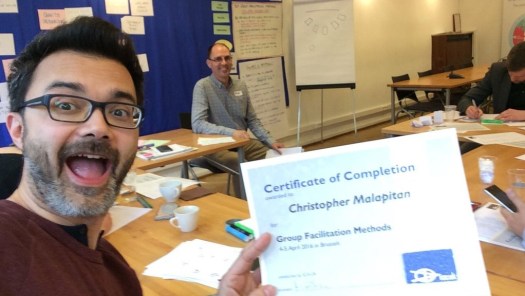
Register now in Eventbrite for ToP Group Facilitation Methods training, 1-2 October in Bristol!


Introducing the foundations of the ToP approach, two powerful techniques for structuring effective conversations and building group consensus – 2 days

“Meetings are a key part of what we do. As a diverse, transnational, multilingual membership network, successful meetings are key to our internal and external successes. Many of our staff mentioned Martin’s training as a highlight in their end of year reviews – several said it was the most useful training they had ever attended, and there was a clear consensus that we should work with him again.”

Eve Geddie, Deputy Director at Platform for International Cooperation on Undocumented Migrants (PICUM)

Who this course is for

The course is for all those who want to be able to engage people more effectively to build shared understanding and consensus, including team leaders and managers within organisations, those working with Boards, management teams, partnerships and external stakeholders, youth and community workers and independent facilitators. This course has no pre-requisite, but is the pre-requisite for Participatory Strategic Planning. It is recommended both to newcomers to facilitation, and to experienced facilitators who are new to our approach.

IAF endorsed trainingPreparing for CPF certification? Meetings That Work, Group Facilitation Methods and Facilitating Client Collaboration together comprise the ICA Associates ToP Facilitation Essentials Program that has been endorsed by the International Association of Facilitators for those preparing to become an IAF Certified Professional Facilitator (CPF).

IAF members enjoy a special 10% discount – see Exclusive Offers for IAF Members.

Questions this course answers

“How can I have more purposeful & productive conversations, bring out the wisdom of a group, encourage feedback between people, and reach shared awareness in meetings? How can I generate and weave together a diverse range of ideas, develop creative solutions and build a group consensus?”

This course provides a structured introduction to the ToP Focused Conversation and Consensus Workshop methods, which form the foundations of the ToP Action Planning method, Participatory Strategic Planning and other applications.

What you will gain

By the end of the course, you will

  • be able to identify when and how to use the Focused Conversation and Consensus Workshop methods
  • have gained confidence in the use of these methods
  • have recognised and explored elements of participation, creativity, teamwork and action
  • have built links with others to promote future collaboration and support in the use of the methods

The Focused Conversation method provides a structured, four-level process for effective communication which ensures that everyone in a group has the opportunity to participate.

The Consensus Workshop method is a five stage process that enables a facilitator to draw out and weave together everybody’s wisdom into a clear and practical consensus.

These methods have been featured in publications including:

See also my own blog posts Four steps to a universal principle of facilitation and learning and Responding to changing situations and needs with ToP Consensus Workshop.

Learning style

The course presents the two methods in a practical and participatory way. Each method is first demonstrated, then analysed and discussed, and then practiced in supportive small groups with guided reflection & feedback. Finally, participants plan how they will apply each method in their own situations.

What do participants say about this course?

93% of GFM participants rated the course 8/10 or higher. Comments from participants’ end-of-course evaluations included:

  • brilliant – a must-do if you want better, more effective meetings
  • provides two practical, easy-to-use methods to discover deep insights from diverse groups – useful tools for any group, organisation or community
  • benefits for experienced facilitator and novice alike
  • worth every penny – excellent content & great presentation

Your trainers

I am pleased to offer this course in partnership with ICA:UK.


See also about mehow I workwho I work with and recommendations & case studies, and please contact me about how we might work together.

Crafting a joint commitment on living wages in banana supply chains

Crafting a joint commitment on living wages in banana supply chains - workshop

“Participating retailers all agree on the need, and nearly all of them have expressed a desire to join a sector commitment. The focus of the workshop will be to agree a draft commitment that each company can sign onto.”

Context

IDH is a Foundation that works with businesses, financiers, governments and civil society to realize sustainable trade in global value chains.

In June 2022, Amanda Penn of the IDH UK team had been working with the nine major UK retailers on measuring living wage gaps in their banana supply chains, and on a sector commitment to close those gaps. Following previous online workshops together during the pandemic, she sought a facilitator for a first in-person workshop in London, from around 11am-5pm one day in July, to engage the CSR officers of the nine retailers to agree a draft commitment.

She wrote that “Participating retailers all agree on the need, and nearly all of them have expressed a desire to join a sector commitment. The focus of the workshop will be to agree a draft commitment that each company can sign onto.”

Participants were to number around 15-20 in total, including a few IDH staff. The loft room ‘Nest 2’ had been booked for the day at Wallace Space St. Pancras.  Participants were invited to stay for drinks together after the workshop.

Aims

Following our initial meetings, the aims of the workshop were agreed to be as follows:

  • To reflect and learn together from our partnership building work to date, and each other’s experience of it, to improve process and co-ordination and clarify needs and expectations,
  • To draw on the draft commitment circulated in advance to agree key elements of a commitment that we hope each company can sign on to,
  • To take a transparent and energizing, interactive and co-operative approach that will build mutual trust, confidence and commitment in the way forward together.

Approach

For this assignment, I drew on the following of ICA’s Technology of Participation (ToP) methods in particular:

The Focused Conversation method provides a structured, four-level process for effective communication which ensures that everyone in a group has the opportunity to participate.

The Consensus Workshop method is a five stage process that enables a facilitator to draw out and weave together everybody’s wisdom into a clear and practical consensus.

I arranged with Wallace Space to reserve the ground floor Locker & Rudder room in the same building in St Pancras, as an alternative to the loft room Nest 2 with its sloping walls, in order to allow vertical wall space for use with a ‘sticky wall’.

None of us were very used to meeting in person, due to two years of COVID restrictions, and it was far from clear that the pandemic was over. So I noted the COVID-19 protective measures in place at Wallace Space, and proposed some additional measures to reassure participants and encourage them to attend, and to further mitigate risks of infection.

These formed the basis of my subsequent blog post Mitigating COVID risks for in person and hybrid events.

Agenda & process

An outline agenda was agreed and circulated as follows:

11.00 Arrivals & coffee – breakfast, coffee and informal workspace is available from 8am
11.15 Opening – welcome & overview, introductions & expectations
11.45 Learning from our experience – including accomplishments & challenges to date, and benefits & challenges ahead
12.45 Lunch
1.30 Crafting our commitment – drawing on the circulated draft to articulate “What are key elements of a Living Wage Commitment for Banana Supply Chains that we would like UK retailers to be able to agree?”
3.15 Break
3.30 Next steps – next steps, reflection & close.
-5.00 Drinks – and informal networking

I used the ToP Focused Conversation method to structure the day as a whole, and to design the opening conversation and closing reflection – see Four steps to a universal principle of facilitation and learning.

I used the ToP Consensus Workshop method to articulate “What are key elements of a Living Wage Commitment for Banana Supply Chains that we would like UK retailers to be able to agree?”.

Critically, I invited participants to draw on the circulated draft commitment to identify elements that they would like retailers to be able to agree. For the purpose of consensus-building, I discouraged them from focusing on what they did not or could not agree, or what it would take for them to be able to agree. The former would be an unhelpful distraction, and the latter would be addressed under Next Steps and following the workshop.

To enable them to work most effectively together, I invited them to adopt the following working assumptions:

  • We are curious and open to learn
  • Everyone has wisdom, and we all need everyone’s wisdom for the wisest result
  • So we will listen with care to understand and speak with care to be understood
  • We will strive to ensure that our own participation does not exclude that of others
  • We will have difficult conversations with courage and compassion
  • We will respect each other’s time by being punctual and avoiding distractions
  • We will respect each other’s health by practicing COVID safety

Feedback and impact

Directly after the workshop, Amanda wrote “Anecdotally, everyone really enjoyed the facilitation and found it useful.”  Participants feedback included:

  • Facilitation was very effective
  • The activities were well designed and triggered really useful conversation at table and room level
  • I would say it met our aim to gain mutual trust and agreement on key elements
  • I think the key thing was to get agreement on the content of the commitment and a timeline for the next steps. Also just really helpful to get an idea of where others stand on this – easy to commit on a zoom call but much harder to maintain this face to face. Reassuring to see that everyone clearly wants to make this happen
  • For us personally it was a great way to get our voice heard by other retailers and encourage understanding of each retailer’s unique supply chain.

UK retailers commit to close living wage gaps in international banana supply chainsA year later, in July 2023, Amanda wrote:

“The top 9 UK retailers launched a living wage commitment in March. On numerous occasions the CSR managers who attended the workshop you led credited that day with being a pivotal moment in the process and paving the way for the ultimate result. So, thank you!” 

In the meantime, I had worked with some of Amanda’s colleagues at IDH to design and facilitate a series of three half-day workshops in London and Brussels for around 30 representatives of partner organisations to develop a joint commitment on living wage in Tea supply chains.

Since then, I was pleased to be able to work with Amanda again, and some of  the UK retailers and some of their European counterparts, to design and facilitate a one day hybrid workshop in Madrid. This involved around 30 in person and a dozen online, representatives of a variety of European partner organisations working to develop joint commitments on living wages in Banana supply chains in a number of European countries.


See also about mehow I workwho I work with and recommendations & case studies, and please contact me about how we might work together.