
ICA International Board update, March 2016

ICAI Global Buzz, October 2015
This post was written for ICAI’s monthly bulletin the Global Buzz, March 2016.

The Institute of Cultural Affairs is a global community of non-profit organisations advancing human development worldwide. The ICAI network comprises member organisations and related groups in over 40 countries.  The role of ICA International is to facilitate peer-to-peer interchange, learning and mutual support across the network, for greater and deeper impact. ICA International maintains consultative status with UN ECOSOC, UNESCO, UNICEF, WHO & FAO.


At our February Board meeting we were pleased to approve a request for financial support toward the cost of an ICA Americas regional gathering to be hosted by ICA Peru in May, and another toward the cost of producing three issues of Winds & Waves magazine in 2016.

We heard updates on prospective candidates for associate membership in India, the Philippines, Poland, France, Russia and the Czech Republic, and on the work of the ICAI Global Conference working group and the ICAI global ToP (Technology of Participation) policy working group.

We approved a Memorandum of Understanding with the International Association of Facilitators (IAF) to promote and support greater collaboration between our two organisations, our respective members and our local groups around the world. The first step toward implementation will be to establish a joint working group comprised of three representatives each of ICAI & IAF, to identify and follow up opportunities.

We reviewed and updated our Board plans for 2016 in light of developments since our 2015-16 planning meeting in Tanzania last May.  Now that there will be no Global Conference in 2016 at which we might also convene a face-to-face Board meeting, we plan to announce Board elections at a General Assembly in October instead of June (or December).  This will enable a two month induction period for new Board members before their terms begin in January. We will explore options and costs for holding a face-to-face Board meeting in conjunction with an ICA regional gathering during that period, for induction and planning as we did last year in Tanzania, and consider including that in a revised 2016 budget for GA approval.

We invited ICAI members to collaborate to draft a statement for submission to the 15th session of the UN Committee of Experts on Public Administration on the topic “Moving from commitments to results: transforming public institutions to facilitate inclusive policy formulation and integration in the implementation and monitoring of the sustainable development goals”.  ICAI is invited to contribute a statement on account of our UN Special Consultative Status with ECOSOC.

Svetlana continues to host weekly ICAI online dialogues in google hangout, including this month a session facilitated by Martin “What is Human Development?“.

We are grateful to the many ICAs that have renewed their dues to ICAI since the General Assembly in December, and those that have updated and completed their ICA profiles on the ICAI website. We are grateful also to the 64 ICA representatives and other readers who have responded already to our Winds & Waves magazine online readership survey.
How engaging can a large facilitated online session be?

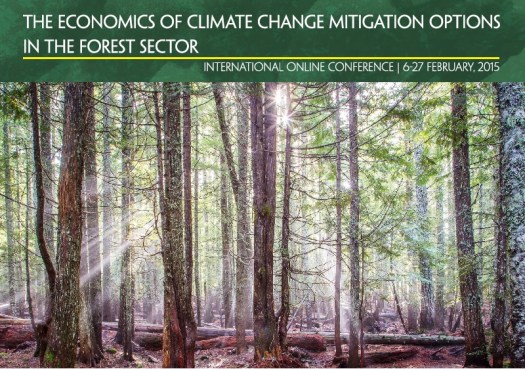
Economics of climate change mitigation options in the forest sector

This was the question that intrigued me when I was first invited to work with with the Forestry Economics team of FAO, to design and facilitate an online conference this month on the Economics of climate change mitigation options in the forest sector. The answer, as it turns out, is pretty engaging!

FAO approached me last September for my experience with the Adobe Connect online meeting platform, with which they are also familiar and which they had chosen to use for the project. Their aims for the conference were to connect researchers, practitioners and others to learn from each other on the costs and benefits of various mitigation options in the forestry sector in different countries, to gather data for a forthcoming FAO publication and perhaps also to establish a community of practice among participants for further learning and collaboration in the future.

The team had not before convened such a substantial online conference, however, and were uncertain how many people they would attract to be involved. Our initial design was for a series of six 90-minute sessions for up to 100 people each, involving a keynote presentation and two shorter case studies followed by questions and answers with the presenters and some small group discussion in break-out rooms. As registrations came in from prospective participants and presenters we were keen to accommodate as many of them as as we could, and our ambitions grew. I was thankful to have partnered on the project with Sheila Cooke of 5Deep, as meeting producer and co-facilitator, for her extensive experience of working with Adobe Connect and with FAO as well.

In the end the conference attracted more than 1,600 registrations from 127 countries, and 126 case studies from 47 counties. Fifty-one presentations on the six conference themes have been shared on the conference website, and over 700 people already have attended the first three sessions. Our remaining sessions continue tomorrow and next week – see below for how to join.

The design we settled on is for six sessions of two hours, using an Adobe Connect ‘seminar room’ with a maximum capacity of 1,500. Participants engage through submitting typed questions for presenters, and responding to questions themselves by text chat and polls. Pre-recorded presentations are replayed by video, to reduce the technical risks of delivering the presentations live. Up to a dozen presenters and expert panellists respond live to questions put to them, and they discuss participants’ typed responses to questions put to them. We dispensed with the idea of small group discussion in breakout rooms because of the technical challenge of supporting so many people to configure their own audio to be heard effectively.

The conference team

The FAO team (led by Illias Animon, Forestry Officer- Economics, and comprising Ruth Mallet, Eros Fornari, Sarah Butler, Marcelo Rezende and Johan Trennestam) lead all content-related tasks, select and assign questions for presenters and also provide technical support behind the scenes to participants and panellists.

After a brief technical orienation and introduction, each session begins with a series of questions to participants to help them and the panellists know something of who is in the room and what experience and interests they bring to the session. The keynote presentation then provides an overview of the topic, followed by questions and answers with the keynote presenter. Each of the additional presenters is then invited to introduce themselves and their presentations briefly, before participants vote for one presentation to view together in full during the session followed by questions and answers with that presenter.

A panel discussion follows, where all panellists share and discuss responses to questions raised by participants before and during the session, on all of their presentations. During the following plenary discussion, participants are invited to share what successes they are proud of, what challenges they face and what resources and other support they can share, while panellists respond and discuss verbally.

The session closes with a brief summary of key points raised, and an opportunity for participants to evaluate the session and share feedback, and what follow-up actions they would like to see or take themselves. Feedback has been largely very positive so far, with more than 60% rating yesterday’s session 9 or 10 out of 10 overall.

If you are wondering just how engaging such a large facilitated online session can be, then join us for one of the remaining sessions, or watch out for the session recordings to be posted to the conference website.

If you are wondering how you might engage large or smaller numbers of people through virtual facilitation, then please do contact me – and see Sheila’s Virtual Facilitation Online training course with ICA USA.

In the meantime, for a flavour of the conference and the importance of its content, take a look at the opening remarks recorded for our first session by Dr. Eva Muller, Director of FAO’s Forest Economics, Policy and Products Division:


For more on my work, and what others have to say about it, please see how I work, who I work with and recommendations & case studies – or view my profile and connect with me on LinkedIn.

You can connect with me also by joining my free facilitation webinars online, and IAF England & Wales’ free facilitation meetups in London and elsewhere.

ICA International Board update, January 2015

ICAI Global Buzz, Sseptember 2014
This post was written for ICAI’s monthly bulletin the Global Buzz, January 2015.

The Institute of Cultural Affairs is a global community of non-profit organisations advancing human development worldwide. The ICAI network comprises member organisations and related groups in over 40 countries.  The role of ICA International is to facilitate peer-to-peer interchange, learning and mutual support across the network, for greater and deeper impact. ICA International maintains consultative status with UN ECOSOC, UNESCO, UNICEF, WHO & FAO.


In December we held two online General Assembly (GA) meetings in Adobe Connect on December 12 (early & late for different time zones), and we conducted asynchronous voting on GA resolutions by Surveymonkey poll between December 12-22.  Full reports were circulated to members before Christmas.

The aims of the ICAI General Assembly, currently held twice per year in June & December, are:

  • to take ICAI membership decisions, including approval of Associate & Statutory memberships
  • to take ICAI strategy & policy decisions, to direct the work of the Board and to guide & support the peer-to-peer collaboration among ICAs
  • to elect the ICAI Board and hold it accountable to the membership, including by receipt of an annual finance report.

A total of sixteen member ICAs were represented by 24 participants at the two online meetings, and 23 of 24 statutory member ICAs participated in the asynchoronous voting.  We are grateful to all who participated.

A full 2013 Financial Statement was presented to the membership, along with summary financial report and Board report for 2014, and a budget for 2015-16 was approved. Two new Associate members were approved for membership, and five new Board members were elected, succeeding four retiring members and bringing the total to eight. The ICAI working group on global conference was extended to work with six potential hosts to recommend a programme and budget for ICAI global conferencing to the GA in June 2015. A revised draft global ToP (Technology of Participation) policy, incorporating feedback from global consultation, was presented by the ICAI global ToP working group for discussion with a view to bringing the policy to a GA vote in the new year.

I take this opportunity now to congratulate, thank and welcome our five new members joining the Board from 1 January – Shizuyo Sato of ICA Japan (a former Board member and President of ICAI), Svetlana Salamatova of ICA Ukraine, Lisseth Lorenzo of ICA Guatmala, Adufu Yawo Gator of ICA Togo and Charles Luoga of ICA Tanzania.  Also I offer warmest thanks on behalf of all the Board and members for the service of our outgoing Board members – Isabel De La Maza of ICA Chile, Shankar Jadhav of ICA India, Gerald Gomani of ICA Zimbabwe and Krishna Shrestha of ICA Australia.  And of course many thanks to my two fellow continuing Board members, Seva Gandhi of ICA USA and Staci Kentish of ICA Canada. At our January meeting this week, the new Board will be joined by outgoing Board members to reflect and learn from the experience of 2013-14 as a prelude to induction, teambuilding and planning for 2015-16.

I am also delighted to welcome now our two new Associate members the Development Institute of Ghana (nominated by ICA Ghana, ICA Zimbabwe & ICA:UK) and Emerging Ecology of USA (nominated by ICA USA, ICA India, ICA Nepal).  Find them now, and all of our worldwide community, on our online Global Network map.

ICA International Board update, September 2014

ICAI Global Buzz, Sseptember 2014
This post was written for ICAI’s monthly bulletin the Global Buzz, September 2014.

The Institute of Cultural Affairs is a global community of non-profit organisations advancing human development worldwide. The ICAI network comprises member organisations and related groups in over 40 countries.  The role of ICA International is to facilitate peer-to-peer interchange, learning and mutual support across the network, for greater and deeper impact. ICA International maintains consultative status with UN ECOSOC, UNESCO, UNICEF, WHO & FAO.


The ICAI Board at its August meeting reviewed the progress and status of several ICAI working groups which are now underway or getting established.  The Technology of Participation (ToP) global policy working group is now consulting with ICAI members and ToP facilitation & training providers worldwide on the draft global ToP policy paper that it had presented to the June General Assembly.  A diverse and experienced team of ten ICA representatives have now accepted nominations to join the new ICAI Global Conference working group that was agreed at the June General Assembly, in order to work with prospective host ICAs to present one or more strong proposals for hosting a 2016 global conference (or conferences) for vote at the December General Assembly.  Nominations are now invited to join the continuing members of the ICAI Board nominations and elections committee, and/or to stand for election to the Board itself next year, in preparation for an election at the December General Assembly to four Board positions coming vacant from January – Vice President Africa, Vice President Asia Pacific, Vice President Americas and Treasurer.  Staci Kentish, Seva Gandhi and I will continue as VP Communications, Secretary and President respectively.

Since the General Assembly clarified criteria for ICAI Associate membership in June, the Board noted expressions of interest in August from prospective new members in Ghana, Korea, Russia and the Phillipines.  We plan to agree a simple new form and process in September for these and/or other nominations to be made formal in time for vote at the December General Assembly.

No further formal requests had yet been received for ICAI financial support toward member initiatives for peer-to-peer support and collaboration, however there is interest from some ICAs wishing to attend the ICA European Interchange to be hosted by ICA Spain near Madrid in November.   Around 20 representatives of ICAs in Latin America have been able to benefit already from ICAI financial support for online training in Spanish on online ToP facilitation using the Adobe Connect platform.

Aziz Rahman at #UNNGO2014We are grateful to Aziz Rahman of ICA Bangladesh for travelling to New York this month to attend the 65th United Nations NGO Conference on behalf of ICAI, on the theme “2015 and beyond: our action agenda”.  Aziz was one of 4,000 registered to attend from over 900 NGOs in 100 countries.

We are grateful also for the editorial team and contributors to the August edition of ICAI’s Winds & Waves magazine “Back to the Future“, which features a series of articles related to the work of ICA’s Global Archives Project (GAP).

The Board agreed to present certificates of appreciation from ICAI to the more than 20 international ToP facilitators and others who had contributed to the successful and high profile Ukraine PEACE Summit of ICA Ukraine in Kiev in July.

On the Road

This article was first written for and published in the IAF Europe MENA newsletter, May 2014.

Moscow facilitators planning ‘What can we do over the next 3 years to promote a culture of participation in our organisations?’Moscow facilitators learned the ToP Participatory Strategic Planning process last month by planning ‘What can we do over the next 3 years to promote a culture of participation in our organisations?’

When Julia Goga-Cooke invited me to contribute to this new ‘On The Road’ section of the newsletter, I think she may have known what sort of month I have been having. As well as visiting some interesting places, I have been able to meet and work with some wonderful IAF colleagues.

I began writing this from Marrakech, where I was facilitating last week for the first Arab Regional Forum on Youth Volunteering. This was convened by UN Volunteers, and brought together over 100 stakeholders from across the region and beyond to share, learn and plan together. On exchanging business cards with one delegate from Jordan, he told me that he had just emailed with IAF about joining or setting up a local chapter. So I was happy to share what I knew about the IAF membership in the region, and IAF’s chapter approach, and to learn from his experience of facilitation and facilitators in Jordan.

Prior to this I was in Turin with IAF member Michael Ambjorn of AlignYourOrg , in preparation for facilitating an event there together this week with the 120 staff of the European Training Foundation to celebrate its 20th anniversary this year. It was in designing this event, including a ToP ‘Wall of Wonder’ historical scanning process, that I had the idea for the rather more elaborate process to contribute to IAF’s 20th anniversary year celebration that became ‘Celebrating the development of facilitation – world-wide and history long’. This was launched in April, online and at the IAF North America conference in Orlando. Please do join in, online and at future conferences and chapter events between now and International Facilitation Week in October.

Prior to that, I was in Moscow at the start of April for the 5th annual Moscow Facilitators’ conference. It was great to be back, having attended for my first time last year and contributing a keynote and pre-conference ToP Group Facilitation Methods training. This year I presented a case study of the ToP Participatory Strategic Planning process with an international humanitarian agency in Geneva, ‘Transformational Strategy: from trepidation to ‘unlocked’’, and post-conference ToP Participatory Strategic Planning training (see photo above). The 100 or so participants came from the regions of Russia and Ukraine and Finland as well as from Moscow and the UK.

I have been privileged these last few weeks as well to serve as a mentor to one of ICA Ukraine’s ToP facilitation trainers, and to learn something of how she and ICA are working to network diverse actors in Ukraine and to re-envisage and rebuild their country’s future together. It was a privilege also (and fun!) to help to network ICA Ukraine’s facilitators with Russian facilitators attending the Moscow Facilitators conference by exchanging real-time Facebook updates between my post-conference ToP strategic planning course in Moscow and Natasha’s simultaneous ToP strategic planning course in Lviv.

It is a great disappointment to me to learn that this year’s IAF Europe MENA conference Facilitation Reloaded will no longer be held in Moscow, although recent events have made it increasingly self-evident that it would not be able to go ahead as planned. It seems to me that there is a need, now more than ever, for facilitation to grow and make a valuable impact in the region. I am delighted to know that the conference will be relocated rather than cancelled, and that the Moscow team will remain involved, and I shall be delighted for the opportunity to visit Copenhagen instead in October. I hope to see you there, and I hope that colleagues from Russia and Ukraine will be able to attend.

In the midst of all this I was also able to squeeze in a day of facilitation training with ICA:UK, for an international firm of sustainability consultants in London – happily, and rather appropriately, I was able to travel to that on foot!