Reflecting on another year in freelance facilitation, 2023-24

As last summer, when I reviewed the year to June 2023, I shall share in this longer read some data and reflections on the last year of my professional practice.

In this past year to June 2024 I delivered 16 contracts for 11 clients. That compares with 14 contracts for 12 clients the year before and 19 for 15 the year before that. This past year’s contracts involved just 2 individual online sessions plus 13 wholly in-person and 2 hybrid events. Events were in Birmingham, Brussels, Leeds, London, Madrid, Sevenoaks and Windsor. That compares with 7 online sessions, 10 in-person & 3 hybrid events last year and 76 online and just 2 in-person the year before that to June 2022, still in the midst of the COVID pandemic.

So contracts have risen a little this year while clients have fallen slightly, however both remain considerably fewer than the largely pre-Covid years to June 2019 and to June 2020 which saw 25 contracts each. The continuing decline in online and hybrid events may partly reflect a continuing post-pandemic return to more in-person collaboration where possible. The lower numbers of clients, contracts and events at least in part reflects my own choices – pre-pandemic to work more locally and online, and post-pandemic to work more selectively and less. 

I resolved in January 2020 to restrict my travel mostly to places accessible to London without flying, and to try to travel less and work more online, and happily that is exactly what I have been able to do since then – albeit without working much online this year. Having also begun to spend more time more often in Sitges, near Barcelona, as I had also resolved then, it was fortunate that the invitation to work in Madrid came at a time when I was scheduled to be there. So I have not flown for work since February 2020, and I have not been tempted to do so.

I was sub-contracted by colleagues for two contracts this year, and for two contracts I sub-contracted to colleagues myself. That compares to none & 3 last year and 1 & 9 the year before. So my return to more working in-person and with travel continues to be associated with more working solo and less as part of a team. 

Partners that I have contracted with this past year included ICA:UK colleagues Alan Heckman and IAF colleagues Marie Dubost and Camilla Gordon

Clients I have worked with this past year have again included UK and European charities, NGOs, and professional & trade associations and multi-sector partnerships. This year also I have worked again with UK local government, with the health service and with Universities.

Of this past year’s contracts, 9 involved facilitation while 7 involved training and none involved coaching and consulting. That compares to 10 facilitation, 3 training and one coaching & consulting the year before, and 7, 7 and 6 the year before that.  So the proportion of facilitation to training has returned to close to 50/50, while that of coaching and consulting this year has returned to zero. Perhaps that reflects a return to pre-pandemic business as usual.

Crafting a joint commitment on living wages in banana supply chains - workshopFacilitation contracts this past year have ranged in scale from a single half-day workshop to a 3 day retreat, for groups ranging from less than 10 to around 100:

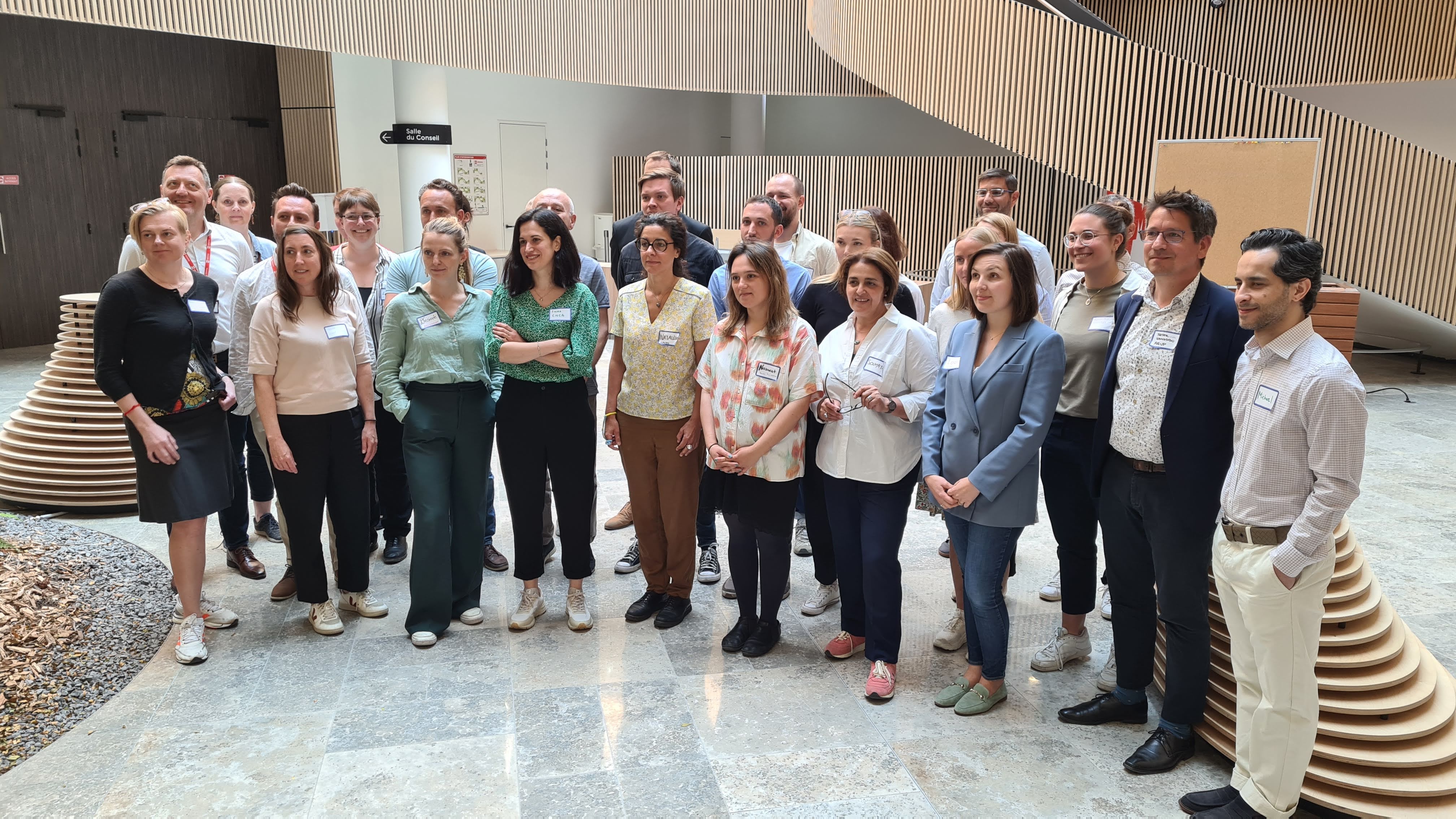
  • with the Royal College of Ophthalmologists and NHS England, design and facilitation of a workshop in London for around 25 stakeholders to build collaboration to improve eye care in England
  • with the Architects Council of Europe design and facilitation of a strategy retreat involving around 15 staff & Board members in Brussels 
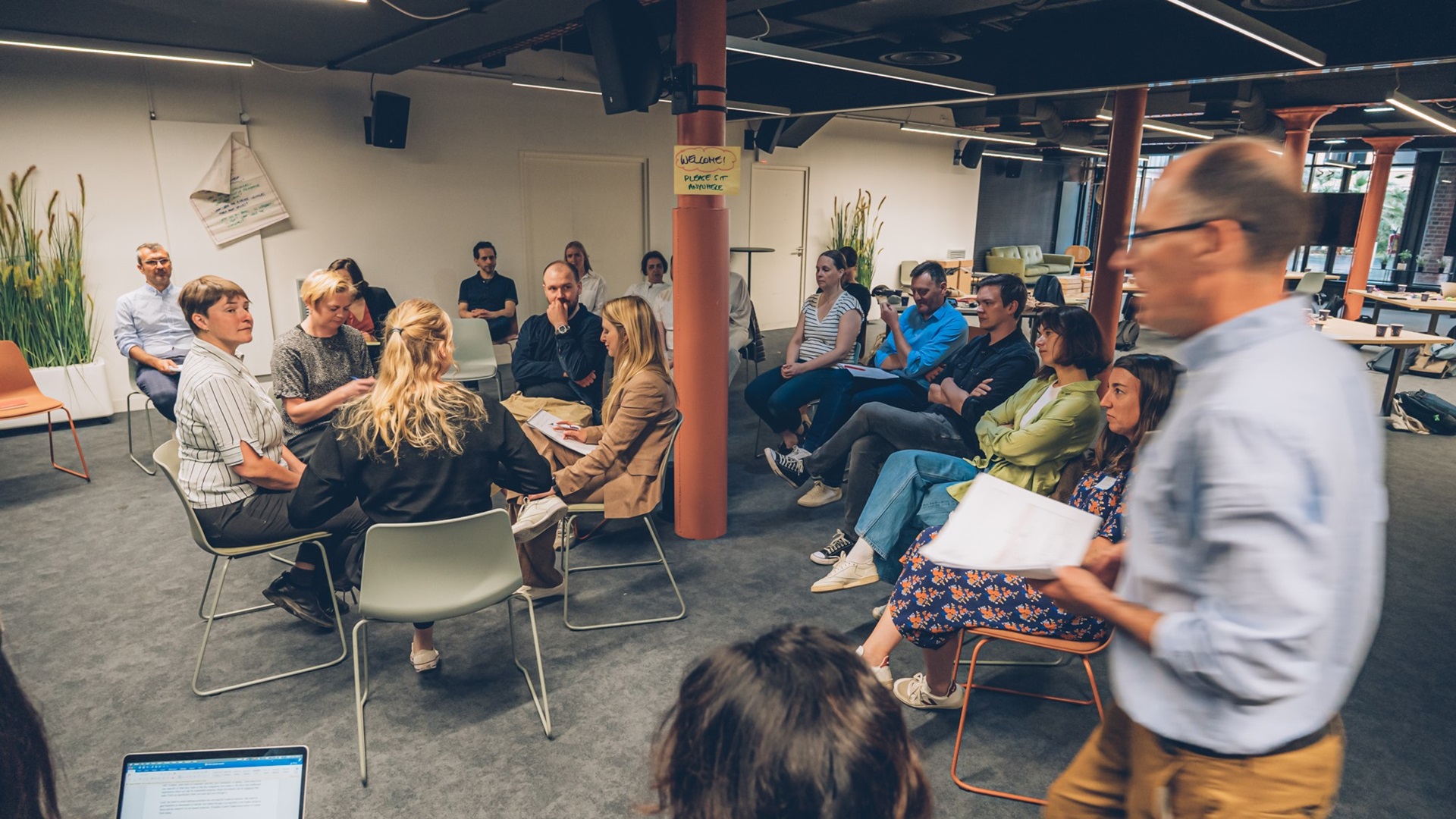
  • with Amnesty International, design and facilitation of a 2-day global strategy and team-building retreat for around 55 member Fundraising Directors and Secretariat fundraising staff in London and online
  • with iStandUK, design and facilitation of a strategy away day in London for partners working on data standards in UK public services
  • with Amnesty International, design and facilitation of a pair of tri-lingual, cross-regional online consultation sessions on global governance, involving 2-3 delegates of each of around 70 member entities worldwide
  • with Shelter, design and facilitation of a 2-day ‘Changemakers Summit’ for around 100 staff of the Communications, Policy & Campaigns Directorate and others in London
  • with Amnesty International, design and facilitation of a one day retreat of the Regional Human Rights Impact Directorate of the International Secretariat in Windsor
  • with Amnesty International, design and facilitation of a 3-day team retreat in Sevenoaks for around 30 members of the East Europe & Central Asia Regional Office of the International Secretariat
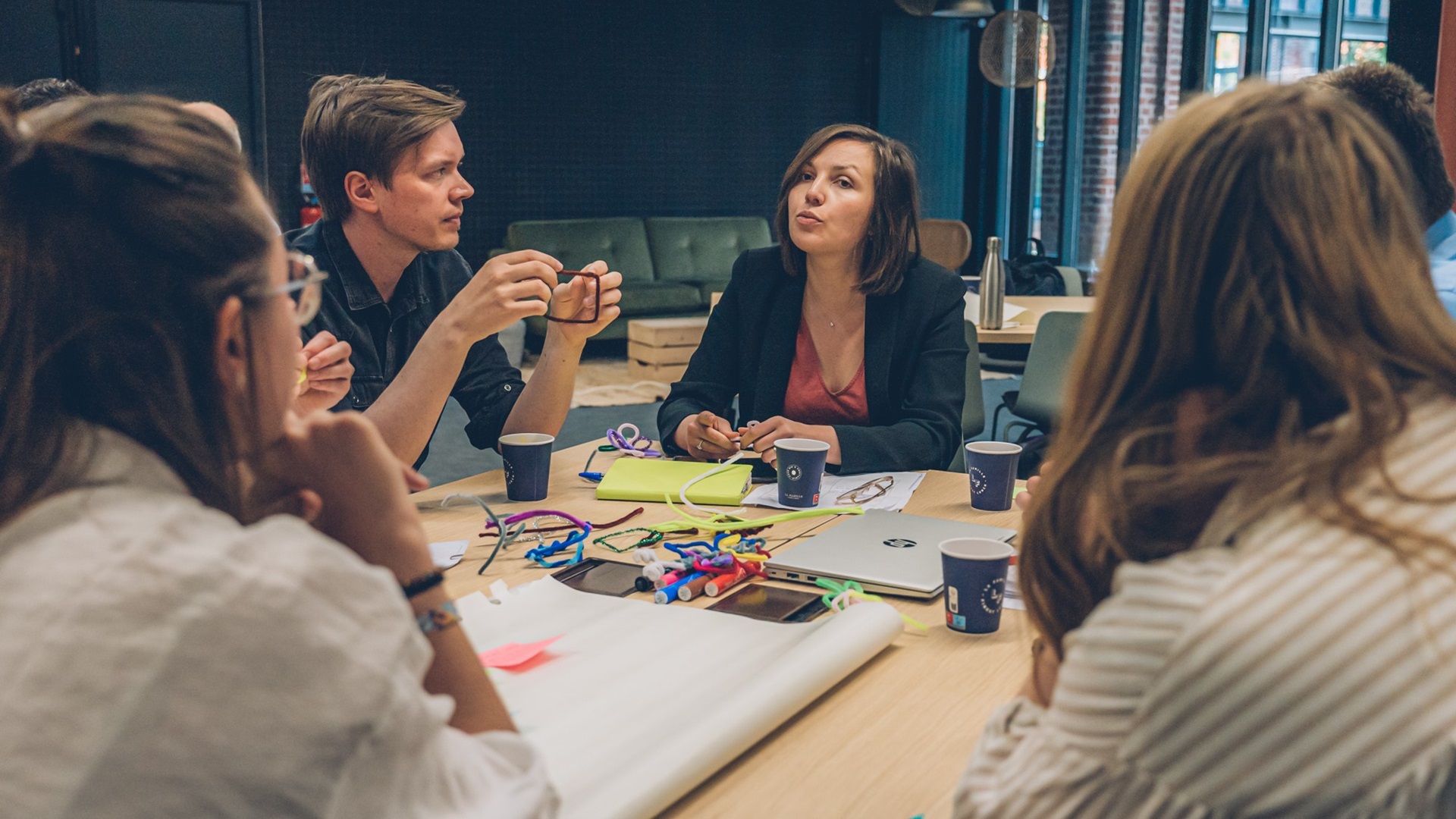
  • with IDH Trade, design and facilitation of a one day hybrid workshop for around 30 in Madrid and a dozen online, representatives of European partner organisations working to develop joint commitments on living wages in Banana supply chains – case study 

Architects’ Council of Europe (ACE-CAE), wrote on LinkedIn:

“Reflecting on last week’s inspiring #strategy workshop!  The ACE Executive Board came together in #Brussels to #brainstorm and pave the path for the future of the organisation. Strategic workshops are not just about planning for the future; they are about transforming vision into actionable steps, highlighted Ruth Schagemann, ACE President. Over the course of this collaborative and creative day, we engaged in strategic discussions about how to leverage impactful advocacy and the organisation’s agenda for action. Excited for what’s ahead and proud of what we’ve accomplished together!” 

Shelley Heckman, Deputy Director at iNetwork wrote on LinkedIn:

“I’ve never been as inspired and energised about the topic of data standards as I have been today with this fantastic group of people! The iStandUK Executive Board met in London to talk ambitiously about our collective commitment to data standards for public services.” 

Training contracts this past year have involved more or less tailored delivery of three standard ICA:UK ToP facilitation training courses:

During this past year I relaunched my own regular schedule of public ToP facilitation training under license with ICA:UK, in collaboration with the ICA:UK team of ToP Associates and in support of a wider ICA:UK organisational restructure.  As part of that restructure I have taken on a volunteer role supporting ICA:UK with it’s website, mailing list and social media.  

In my new schedule for 2024 I re-established my pre-COVID pattern of offering three pairs of courses per year in London plus occasional courses elsewhere, in partnership or on demand – so far in Birmingham and Bristol. I also re-established my 2013 partnership offer ToP facilitation training at your place – and free places for you!. I am particularly interested to partner to offer public courses in Brussels again, as I did from 2014-2020, and/or in Barcelona. 

Abi Green, Company Director at The Conscious Project, wrote this year:

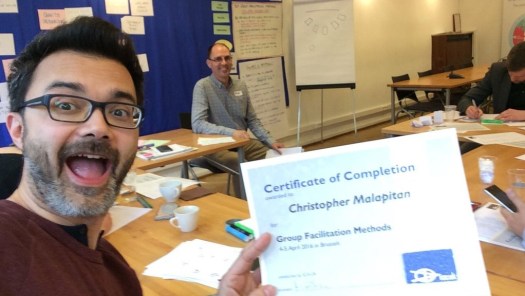
“I attended [Group Facilitation Methods] a few years ago, and I have been using what I learned ever since! In my experience you are a patient teacher who accurately judges the individual’s need for stretch or reassurance. As a facilitator, you create a space where people can listen to each other and be heard. I’d wholeheartedly recommend both your courses and your practice.” 

Trey Darley, cat herder; bit-flipper; human, wrote this year:

“Martin Gilbraith’s group facilitation training was a terrific investment of three days, the best training of my career hands-down…” 

free facilitation coachingMy coaching and mentoring this past year has all been pro bono. It has included four younger facilitators taking up my offer of free facilitation coaching in support of their work for climate justice, gender equity or anti-racism, six ToP trainees taking up my offer of an hour’s free post-course coaching and my support of another three on their journey to become ICA:UK ToP trainers. 

For IAF I continue to serve as a volunteer mentor in the IAF mentoring programme, working with two mentees of each six-month cohort. I have been in conversation this past year with members of the IAF Board to support a new programme along similar lines, by which incoming new Board members could be supported in their roles by former Board members such as me.

For the Power of Facilitation, I continued to support more than 80 IAF colleagues around the world to work to translate the book into more than a dozen languages. Additional translated editions were launched during the year in Japanese, Portuguese, Romanian, Russian & Spanish

My free facilitation webinars this year were limited to one further session on Feminist Facilitation, for Facilitation Week 2023, following two on the same topic the previous year. This year’s attracted 95 participants.

In my own professional development I have continued to value the professional community and facilitation meetups of IAF England & Wales, and particularly again the in-person conference in Birmingham in April, this year titled Facilitate2024: GrowingTogether.

I have also enjoyed returning to share in the hosting of IAF coffee meetups in London, after taking a break since I hosted such meetups for 5 years until 2020.   

My volunteering with the Gay Outdoor Club has grown to enjoyably absorb more of my time in the past year, as it increasingly provides opportunities to apply my professional experience as well.  

In addition to hosting regular online socials this past year, in my Board role as Website & IT manager I have led a redesign of the GOC website and marketing materials for our 50th anniversary year in 2024, a member engagement process to develop a new strategy for the club and a social media advertising campaign that generated over 400 new members.

Having discovered the great hiking opportunities to be had around Sitges, near Barcelona, now that I am spending more of my time there, I have also applied my professional skills to offer a Midweek Walking “Weekend” in Sitges in October for 35 members at least – like a team retreat or a conference, but sunnier and more fun! 

Thank you for following. If you don’t find me online, or in facilitation, training and consulting, you might find me outdoors or in Sitges!


See also about mehow I workwho I work with and recommendations & case studies, and please contact me about how we might work together.

The Art of Focused Conversation, Second Edition: More Than 100 Ways to Access Group Wisdom in Your Organization

“Questions are the primary tool of the facilitator. If you have ever wondered what questions to ask, or in what order to ask them, to lead a conversation that is focused, intentional, inclusive, and productive, let this book be your guide.

I was once asked if there is such a thing as a universal principle of facilitation — mine is ORID, the powerful, foundational model of this ToP Focused Conversation method.” – Martin Gilbraith


by R. Brian Stanfield and Jo Nelson

The essential, bestselling guide to designing and leading useful and effective group conversations is now completely revised and updated.

The Art of Focused Conversation is the quintessential theoretical and practical guide to group communication and participatory decision-making. Incorporating over 60 years of meticulous research and collaborative development, this perennial, international bestseller is an indispensable addition to any facilitator’s toolkit.

The Focused Conversation Method at the heart of The Art of Focused Conversation is a core component of the Technology of Participation (ToP) methodology developed by the Institute of Cultural Affairs. The original book is widely regarded as a key resource for designing and leading useful and effective conversations and fostering consensus and collaboration. This fully updated and revised edition includes:

  • Preparation and guidelines for discussing challenging topics and facilitating a focused conversation
  • A comprehensive overview of the ORID framework, made up of Objective, Reflective, Interpretive, and Decisional questions which guide a group to wise decisions
  • In-depth analysis of how the underlying structure of ToP is based on applied phenomenology and is supported by the latest findings in neuroscience and social psychology
  • New sections on diversity, equity, and inclusion; work-life balance; conflict resolution; and guiding focused conversations online
  • 125 sample conversations that can be adapted to any situation.

Invigorate and elevate your group process with this invaluable resource—required reading for facilitators, leaders, educators, and anyone who wants to think clearly and guide thoughtful conversations.

Brian Stanfield was an educator, researcher, and Director of Publications at the Canadian Institute of Cultural Affairs. Editor of the first edition of The Art of Focused Conversation and The Workshop Book and author of The Courage to Lead, Brian made a lasting contribution to the use of participatory practices in facilitation. He died in 2006.

Jo Nelson worked with the Institute of Cultural Affairs for 50 years, leading participatory development projects and designing and teaching ToP facilitator training programs. She was a contributor to the first edition of The Art of Focused Conversation and is author of The Art of Focused Conversation for Schools and Getting to the Bottom of ToP.

Pre-ordering is available at a discount until September 10 – order from New Society Publishers or Amazon.


See also about mehow I workwho I work with and recommendations & case studies, and please contact me about how we might work together.

New! ToP Group Facilitation Methods training in Bristol, 1-2 October

Register now for public courses in EventbriteI am excited to announce an addition to my 2024 public ToP facilitation training schedule:

Register now in Eventbrite for ToP Group Facilitation Methods training, 1-2 October in Bristol!


Introducing the foundations of the ToP approach, two powerful techniques for structuring effective conversations and building group consensus – 2 days

“Meetings are a key part of what we do. As a diverse, transnational, multilingual membership network, successful meetings are key to our internal and external successes. Many of our staff mentioned Martin’s training as a highlight in their end of year reviews – several said it was the most useful training they had ever attended, and there was a clear consensus that we should work with him again.”

Eve Geddie, Deputy Director at Platform for International Cooperation on Undocumented Migrants (PICUM)

Who this course is for

The course is for all those who want to be able to engage people more effectively to build shared understanding and consensus, including team leaders and managers within organisations, those working with Boards, management teams, partnerships and external stakeholders, youth and community workers and independent facilitators. This course has no pre-requisite, but is the pre-requisite for Participatory Strategic Planning. It is recommended both to newcomers to facilitation, and to experienced facilitators who are new to our approach.

IAF endorsed trainingPreparing for CPF certification? Meetings That Work, Group Facilitation Methods and Facilitating Client Collaboration together comprise the ICA Associates ToP Facilitation Essentials Program that has been endorsed by the International Association of Facilitators for those preparing to become an IAF Certified Professional Facilitator (CPF).

IAF members enjoy a special 10% discount – see Exclusive Offers for IAF Members.

Questions this course answers

“How can I have more purposeful & productive conversations, bring out the wisdom of a group, encourage feedback between people, and reach shared awareness in meetings? How can I generate and weave together a diverse range of ideas, develop creative solutions and build a group consensus?”

This course provides a structured introduction to the ToP Focused Conversation and Consensus Workshop methods, which form the foundations of the ToP Action Planning method, Participatory Strategic Planning and other applications.

What you will gain

By the end of the course, you will

  • be able to identify when and how to use the Focused Conversation and Consensus Workshop methods
  • have gained confidence in the use of these methods
  • have recognised and explored elements of participation, creativity, teamwork and action
  • have built links with others to promote future collaboration and support in the use of the methods

The Focused Conversation method provides a structured, four-level process for effective communication which ensures that everyone in a group has the opportunity to participate.

The Consensus Workshop method is a five stage process that enables a facilitator to draw out and weave together everybody’s wisdom into a clear and practical consensus.

These methods have been featured in publications including:

See also my own blog posts Four steps to a universal principle of facilitation and learning and Responding to changing situations and needs with ToP Consensus Workshop.

Learning style

The course presents the two methods in a practical and participatory way. Each method is first demonstrated, then analysed and discussed, and then practiced in supportive small groups with guided reflection & feedback. Finally, participants plan how they will apply each method in their own situations.

What do participants say about this course?

93% of GFM participants rated the course 8/10 or higher. Comments from participants’ end-of-course evaluations included:

  • brilliant – a must-do if you want better, more effective meetings
  • provides two practical, easy-to-use methods to discover deep insights from diverse groups – useful tools for any group, organisation or community
  • benefits for experienced facilitator and novice alike
  • worth every penny – excellent content & great presentation

Your trainers

I am pleased to offer this course in partnership with ICA:UK.


See also about mehow I workwho I work with and recommendations & case studies, and please contact me about how we might work together.

Crafting a joint commitment on living wages in banana supply chains

Crafting a joint commitment on living wages in banana supply chains - workshop

“Participating retailers all agree on the need, and nearly all of them have expressed a desire to join a sector commitment. The focus of the workshop will be to agree a draft commitment that each company can sign onto.”

Context

IDH is a Foundation that works with businesses, financiers, governments and civil society to realize sustainable trade in global value chains.

In June 2022, Amanda Penn of the IDH UK team had been working with the nine major UK retailers on measuring living wage gaps in their banana supply chains, and on a sector commitment to close those gaps. Following previous online workshops together during the pandemic, she sought a facilitator for a first in-person workshop in London, from around 11am-5pm one day in July, to engage the CSR officers of the nine retailers to agree a draft commitment.

She wrote that “Participating retailers all agree on the need, and nearly all of them have expressed a desire to join a sector commitment. The focus of the workshop will be to agree a draft commitment that each company can sign onto.”

Participants were to number around 15-20 in total, including a few IDH staff. The loft room ‘Nest 2’ had been booked for the day at Wallace Space St. Pancras.  Participants were invited to stay for drinks together after the workshop.

Aims

Following our initial meetings, the aims of the workshop were agreed to be as follows:

  • To reflect and learn together from our partnership building work to date, and each other’s experience of it, to improve process and co-ordination and clarify needs and expectations,
  • To draw on the draft commitment circulated in advance to agree key elements of a commitment that we hope each company can sign on to,
  • To take a transparent and energizing, interactive and co-operative approach that will build mutual trust, confidence and commitment in the way forward together.

Approach

For this assignment, I drew on the following of ICA’s Technology of Participation (ToP) methods in particular:

The Focused Conversation method provides a structured, four-level process for effective communication which ensures that everyone in a group has the opportunity to participate.

The Consensus Workshop method is a five stage process that enables a facilitator to draw out and weave together everybody’s wisdom into a clear and practical consensus.

I arranged with Wallace Space to reserve the ground floor Locker & Rudder room in the same building in St Pancras, as an alternative to the loft room Nest 2 with its sloping walls, in order to allow vertical wall space for use with a ‘sticky wall’.

None of us were very used to meeting in person, due to two years of COVID restrictions, and it was far from clear that the pandemic was over. So I noted the COVID-19 protective measures in place at Wallace Space, and proposed some additional measures to reassure participants and encourage them to attend, and to further mitigate risks of infection.

These formed the basis of my subsequent blog post Mitigating COVID risks for in person and hybrid events.

Agenda & process

An outline agenda was agreed and circulated as follows:

11.00 Arrivals & coffee – breakfast, coffee and informal workspace is available from 8am
11.15 Opening – welcome & overview, introductions & expectations
11.45 Learning from our experience – including accomplishments & challenges to date, and benefits & challenges ahead
12.45 Lunch
1.30 Crafting our commitment – drawing on the circulated draft to articulate “What are key elements of a Living Wage Commitment for Banana Supply Chains that we would like UK retailers to be able to agree?”
3.15 Break
3.30 Next steps – next steps, reflection & close.
-5.00 Drinks – and informal networking

I used the ToP Focused Conversation method to structure the day as a whole, and to design the opening conversation and closing reflection – see Four steps to a universal principle of facilitation and learning.

I used the ToP Consensus Workshop method to articulate “What are key elements of a Living Wage Commitment for Banana Supply Chains that we would like UK retailers to be able to agree?”.

Critically, I invited participants to draw on the circulated draft commitment to identify elements that they would like retailers to be able to agree. For the purpose of consensus-building, I discouraged them from focusing on what they did not or could not agree, or what it would take for them to be able to agree. The former would be an unhelpful distraction, and the latter would be addressed under Next Steps and following the workshop.

To enable them to work most effectively together, I invited them to adopt the following working assumptions:

  • We are curious and open to learn
  • Everyone has wisdom, and we all need everyone’s wisdom for the wisest result
  • So we will listen with care to understand and speak with care to be understood
  • We will strive to ensure that our own participation does not exclude that of others
  • We will have difficult conversations with courage and compassion
  • We will respect each other’s time by being punctual and avoiding distractions
  • We will respect each other’s health by practicing COVID safety

Feedback and impact

Directly after the workshop, Amanda wrote “Anecdotally, everyone really enjoyed the facilitation and found it useful.”  Participants feedback included:

  • Facilitation was very effective
  • The activities were well designed and triggered really useful conversation at table and room level
  • I would say it met our aim to gain mutual trust and agreement on key elements
  • I think the key thing was to get agreement on the content of the commitment and a timeline for the next steps. Also just really helpful to get an idea of where others stand on this – easy to commit on a zoom call but much harder to maintain this face to face. Reassuring to see that everyone clearly wants to make this happen
  • For us personally it was a great way to get our voice heard by other retailers and encourage understanding of each retailer’s unique supply chain.

UK retailers commit to close living wage gaps in international banana supply chainsA year later, in July 2023, Amanda wrote:

“The top 9 UK retailers launched a living wage commitment in March. On numerous occasions the CSR managers who attended the workshop you led credited that day with being a pivotal moment in the process and paving the way for the ultimate result. So, thank you!” 

In the meantime, I had worked with some of Amanda’s colleagues at IDH to design and facilitate a series of three half-day workshops in London and Brussels for around 30 representatives of partner organisations to develop a joint commitment on living wage in Tea supply chains.

Since then, I was pleased to be able to work with Amanda again, and some of  the UK retailers and some of their European counterparts, to design and facilitate a one day hybrid workshop in Madrid. This involved around 30 in person and a dozen online, representatives of a variety of European partner organisations working to develop joint commitments on living wages in Banana supply chains in a number of European countries.


See also about mehow I workwho I work with and recommendations & case studies, and please contact me about how we might work together.

ToP facilitation training at your place – and free places for you!


Register now for public courses in EventbriteAre you interested in taking or commissioning ToP facilitation training – but you don’t find any scheduled public courses to suit you, and you don’t have a group large enough to make an in-house course cost-effective?

I’d be happy to talk with you about scheduling a partnership course with you, at your place, wherever you are – please contact me.

If you can provide a suitable space for the training, or perhaps venue & catering and trainer accommodation as well, then you could enjoy a number of free and/or discounted places for you or your delegates. We would need only to recruit enough fee-paying trainees between us by an agreed deadline to make up the numbers and the budget to confirm the course. Depending on the location and the deadline I may be able to recruit those extra people myself, and handle online registrations and payments. If you can recruit more people yourself, from your networks, and if you can handle registrations and payments, then you could have more free or discounted places and maybe a shorter lead time as well.

If you choose one of my regularly scheduled public courses listed below, then we will be better able to confirm the course even if you can’t recruit many people yourself. If you have particular training needs and you can recruit others who share them, then we could develop and schedule a public course tailored to meet your needs.

Since 2013 when I launched my own public and partnership courses under license with ICA:UK, with whom I have offered public and in-house training since 1998, I have offered dozens of such partnership courses in locations including (most often) Brussels, and Edinburgh, Geneva, Istanbul, Kiev, Moscow, Pisa and online.

I deliver in English and with simultaneous interpretation. I draw on the worldwide network of ICA International to provide ToP training materials in many languages, and to arrange for experienced local ToP trainers to deliver with me (or without me) in many languages.

I particularly welcome opportunities to deliver training within a day or two’s surface travel from London or Barcelona.  If I am not tempted to fly to deliver training myself further afield, then I shall be glad to recommend an alternative experienced ToP trainer who is more local to you – see What can I do about climate change, personally and as a facilitator?


See also about mehow I workwho I work with and recommendations & case studies, and please contact me about how we might work together.

Register now in Eventbrite for my own upcoming public courses in London & elsewhere. For additional courses, dates & locations offered by fellow ICA:UK Associates, including online, see A new schedule and special offers for ToP facilitation training.