How can we take time out to reflect, learn and plan together as a team when the COVID19 pandemic prevents us from coming together for an in-person ‘Away Day’, as we once would have done? What can be achieved by an online ‘Away Day’, and how could that work?
These were among the questions that led the Director of a national public sector educational service to approach me for facilitation of an online Management Team “Away Day” earlier this year.
Context
The Director had written in advance, by way of context:
The service is a business unit of the central government department rather than separate from it. The service is provided by 221 individual providers working across 23 offices nationally. We are a busy senior management team of 9, always progressing and developing and allowing ourselves little time to think and reflect on the bigger picture. We are hoping to take time together to do that, and to come up with a plan for how to go forward. We started off with the idea that we need an organisational review to look at our function and form and adjust our form to meet our evolving function.
The team had cleared a precious two days in their diaries for their ‘Away Day’ – a Friday and the following Monday, later that month. We quickly agreed to schedule a maximum of two 2-hour online sessions over each of those two days, and turned our attention to how to best spend that time – and any asynchronous time that the team could make available in advance.
Aims
Following further conversation, we agreed that the aims of the ‘Away Days’ were to be broadly as follows:
- to reflect and learn together on the team’s experience of the unfolding story of development and change of the Service, over time and in context,
- to develop and agree principles that should be upheld in how the Service is structured to best fulfill its changing functions,
- to develop and consider models of how those principles might best be applied in a new organizational form,
- to agree next steps – including perhaps consultation with staff and other stakeholders, and
- to build shared clarity, confidence, and commitment toward to a new way forward together.
Approach
The approach I proposed drew on the methods of ICA’s Technology of Participation (ToP). Pioneered and refined by ICA in over 50 years of experience worldwide, this is a proven system of methods and tools that can be adapted and applied to help all sorts of groups accomplish a wide variety of tasks together. The core values of the ToP approach, which inform all of my work, are inclusive participation, teamwork and collaboration, individual and group creativity, ownership and action, reflection and learning.
 The Focused Conversation method provides a structured, four-level process for effective communication which ensures that everyone in a group has the opportunity to participate.
 The Consensus Workshop method is a five-stage process that enables a facilitator to draw out and weave together everybody’s wisdom into a clear and practical consensus.
 The Historical Scan method combines elements of these two. It provides a participatory approach for a group to review the past to prepare for the future, to reflect and learn together from their own and each other’s experience of the team and organisation’s change and context.
Tools
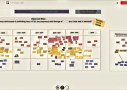
We agreed that the sessions would be held in Zoom, for it’s audio, video and chat functions, and use Mural for visual brainstorming and clustering of ideas.
The team used WebEx for their regular online meetings, but they were familiar with Zoom and quick to agree to use that – it was an ‘away’ day they wanted, after all! They were not familiar with Mural, but the Director was encouraged by a quick demo and quick to agree the advantages of such a visual approach.
Process
The agenda for the two days comprised three 2-hour sessions, two on Friday and one on Monday afternoon, plus asynchronous individual or small group work on Monday morning:
| |
Friday |
Monday |
| Morning.
10am–12 noon |
Session 1
- Opening & welcome, introductions & hopes
- Overview of aims, process & tools
- Historical Scan – what can we learn from the unfolding story of the Service, over time and in context?
- Reflection & close
|
Individual or small group work
Developing models of how those agreed principles might best be applied in a new organizational form for the Service
- visually in Mural or on paper
- physically in Lego, playdough or whatever you have to hand!
- or in a chart, diagram or text.
|
| Afternoon.
2-4pm |
Session 2
- Opening
- Consensus Workshop – what principles should be upheld in how the Service is structured to best fulfill its changing functions?
- Your assignment of individual or small group work for Monday afternoon
- Reflection & close
|
Session 3
- Opening
- Presentation & review of models – reflections & patterns, insights & implications, how can we build on the best of them all?
- Next steps – commitments & deadlines
- Reflection & close.
|
On the Monday before the away days I circulated details of the aims, process and tools to the whole team. I invited them to familiarize themselves with Mural in advance, by watching a short video tutorial and sharing introductions and hopes for the sessions there on digital ‘sticky notes’. I invited them also to bring some brainstorm ideas to our opening session if they could – in answer to the question: “What are some key events and milestones in the unfolding story of the Service and its context, from 2000 to the present (and, as you might anticipate, ahead to 2030)?”
I was joined for the sessions by fellow ICA:UK Associates Orla Cronin (session 1) and Megan Evans (2 & 3). Neither of them was available at short notice for all three sessions, but the three of us were well enough acquainted with each other and the ToP approach that that barely mattered.
How it unfolded
Even for such a relatively small group and simple process as this, it did prove invaluable to have Orla and Megan with me in the sessions to play the role of producer. We certainly could have managed without, but only at the cost of time and attention – both especially precious commodities online. They were both able to alert me to things I hadn’t noticed in the group and its process, even while taking care of the tech so that I and the group could pay attention to the group and its process.
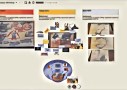
The group took very quickly to both the process and the tools. Giving the group a chance to use the practice Mural in advance was a good idea, as was a second email to encourage them to try it. While one or two found Mural to be something of a distraction to them on occasions, all three small groups chose to present their models on the Mural board in session 3. One group added not just photographs of their models, but lots of additional material as well.
Our impression was that their time for asynchronous working on Monday morning had been very valuable in thinking about the future format of the service. All participants appeared very engaged in the discussions, although perhaps also concerned about the reality of developing new ways of working in a post COVID19 world.
Giving participants enough time in the Consensus Workshop in session 2 to discuss their ideas in groups certainly paid off. Little clarification was needed and discussions were constructive. As they were a small group who knew each other and the organisation very well, the naming stage proceeded remarkably quickly. The participants inputted their ideas directly onto cards pre-loaded onto the Mural with no problems and in the next stages the fact that as facilitators we could see which cards they were moving despite them being in breakout rooms helped us to manage the time well.
All of the sessions could have benefited from more time, and we did extend a couple of them a little in order to end them well. However, we were glad not to have packed more screen time into the two days than we did, and to have allowed for 10 minute breaks with each session.
I learned that sharing shortened bit.ly links to the Mural boards, as a more user-friendly alternative to the very long and cumbersome original Mural links, in fact excluded some whose security settings prevented them from following the links!
What the participants had to say


See also about me, how I work and who I work with, and please contact me about how we might work together. Please do not delay before contacting me – the earlier I hear from you, the more chance that I will be able to help and the more helpful I may be able to be.
Register now on Eventbrite for my free facilitation webinars, and for my regularly scheduled ToP facilitation training courses in London and Brussels and now online too.
Like this:
Like Loading...

 Thank you very much indeed to the 15 or so people who participated in my session in Brussels this evening, and to Marie Dubost and IAF Belgium for the invitation and for hosting.
 In the session, I demonstrated a participatory approach for a group to review the past, to prepare for the future, by applying the ToP (Technology of Participation) Historical Scan method to to reflect and learn together from our diverse experience and perspectives on facilitating a culture of participation in international organisations. I also shared some insights into the theory behind the method and examples of the method in action, and invited participants to consider ways that they can apply the method in their own practice
 Today’s IAF Belgium session slides – pdf
 Celebrating 20 years with the European Training Foundation in Turin – #ETF20 – case study
 Register now in Eventbrite for my upcoming public courses in Brussels in September & December, and in London & elsewhere