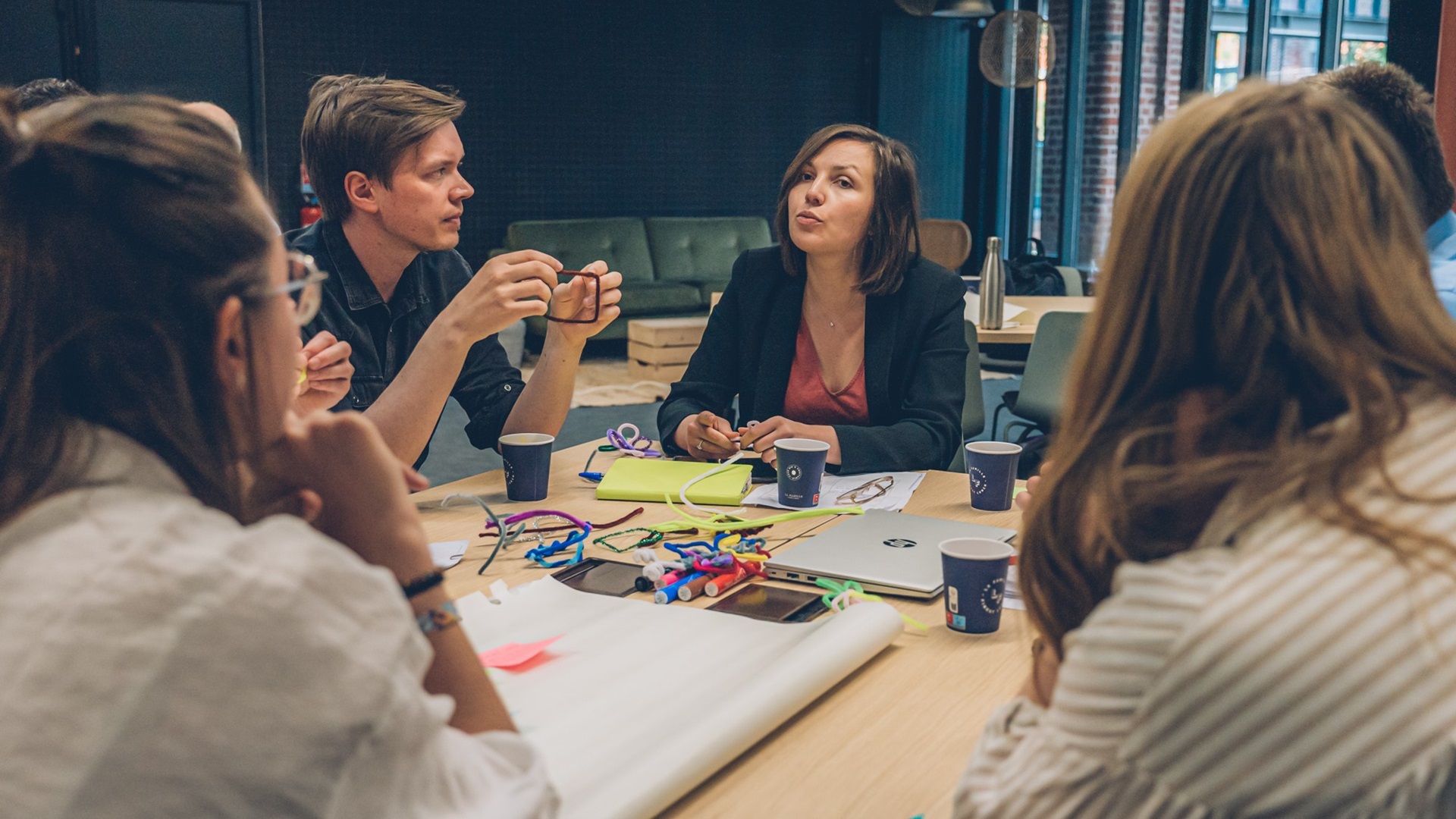

“Over the course of this collaborative and creative day, we engaged in strategic discussions about how to leverage impactful advocacy and the organisation’s agenda for action. Excited for what’s ahead and proud of what we’ve accomplished together!” – Architects’ Council of Europe (ACE-CAE) on LinkedIn
Context
I was approached in May 2024 by the Architects’ Council of Europe Secretary General Ian Pritchard and Head of Communications Julie Deutschmann, to facilitate a strategy retreat with the ACE/CAE Executive Board in Brussels in June. They approached me after I had facilitated a similar strategy meeting for ACE in October 2020, online – see Recommendations & case studies.
It was planned for the eleven members of the ACE Board and 3-4 key Secretariat staff to gather for a one full-day strategy meeting on 21 June in Brussels, some 3½ years since that last facilitated strategy session online.
A draft agenda had been prepared, and notes of preparatory work done in advance including a summary of research and member consultation to identify and map critical themes that might be included in the strategy.
Aims
In conversation with Ian and Julie, and ACE President Ruth Schagemann and Senior Policy Officer Pierre Obajtek, the aims of the day were agreed to be as follows:
- To reflect on, appreciate, and learn from ACE’s recent activity and outcomes together, in the context of its changing strategic landscape;
- To develop the basis of a new 5 year strategy, including a review of the ACE core values, mission & vision and agreement on strategic objectives and critical themes;
- To review and consider implications for ACE’s internal operating environment, strategy implementation and communication;
- To build shared clarity, confidence and commitment to the way forward together.
Methodology and approach
For this assignment, I proposed to draw on the following of ICA’s ToP methods in particular:
 The Focused Conversation method provides a structured, four-level process for effective communication which ensures that everyone in a group has the opportunity to participate.
 The Consensus Workshop method is a five-stage process that incorporates Focused Conversation for effective communication and that enables a facilitator to draw out and weave together everybody’s wisdom into a clear consensus.
 The Historical Scan method adapts these two methods to provide a powerful, visual way to enable a group to build a shared picture of their journey together, in historical and strategic context, to learn from their past and present in order to prepare for their future.
 The ToP Participatory Strategic Planning process is a 4-stage process, each stage involving a specially tailored ToP Consensus Workshop process. The four stages are:
- Practical Vision – what the group would like to see in place in 3-5 years’ time as a result of successfully delivering the new strategy,
- Underlying Contradictions – the obstacles or issues in current reality that are preventing that vision from happening, which must be dealt with in order to move forward,
- Strategic Directions – innovative courses of action that the group can take to deal with the underlying contradictions and move it toward realising its vision,
- Implementation Plan – a set of practical actions that will start the group’s journey from where it is to where it wants to be. A clear outline of will be done, why, how, when and by whom.
These four workshops are preceded as appropriate by clarifying the parameters of the strategy, including mission and purpose, and by ‘reviewing the past to prepare for the future’, including internal & external strategic context.
To adapt and apply such an approach to a single, one-day in-person workshop for ACE, I proposed to use the Consensus Workshop method in full for the Practical Vision stage of the planning process, and a quicker and less rigorous approach to the Underlying Contradictions and Strategic Directions, in order to accomplish all of those and the Historical Scan as well in the one day.
Agenda & process
| 9.00 | Arrivals & coffee |
| 9.30 | Opening & overview – introductions & expectations; approach, aims & agenda
Context & parameters – review advance preparation, research & consultation; confirm ACE core values, mission & vision |
| 10.15 | Reviewing the past to prepare for the future – ‘Historical Scan’ exercise, in the light of our research & consultation:
“What are key events, accomplishments & milestones in the recent history of ACE and it’s strategic landscape? What can we appreciate and what can we learn?” |
| 11.15 | Break |
| 11.30 | Practical Vision – ‘Consensus Workshop’, in the light of our research & consultation:
“What do we want to see in place in 5 years’ time, as a result of successfully delivering the new ACE strategy?” |
| 13.00 | Lunch |
| 14.00 | Current Reality SWOT analysis, in the light of our research & consultation:
“What strengths & opportunities may help our vision to be realised, and what weaknesses & threats may hinder it?” |
| 15.00 | Break |
| 15.15 | Strategic Directions:
“What are implications for ACE for the next 5 years, and for implementation in 2024-25 in particular – for Strategic Objectives & Critical Themes, for the internal operating environment and for strategy implementation and communication? |
| -17.00 | Next steps, evaluation, reflection & close |
Feedback and impact
Participants’ on-site feedback included:
- Dynamic, engaging, inclusive
- Good to have time for debate and discussion
- New perspectives
- Well prepared
Architects’ Council of Europe (ACE-CAE) posted soon afterwards on LinkedIn:
The ACE Executive Board came together in #Brussels to #brainstorm and pave the path for the future of the organisation.
Strategic workshops are not just about planning for the future; they are about transforming vision into actionable steps, highlighted Ruth Schagemann, ACE President.
Over the course of this collaborative and creative day, we engaged in strategic discussions about how to leverage impactful advocacy and the organisation’s agenda for action. Excited for what’s ahead and proud of what we’ve accomplished together!
See also about me, how I work, who I work with and recommendations & case studies, and please contact me about how we might work together.
 Thank you very much indeed to the 15 or so people who participated in my session in Brussels this evening, and to